
+92 331 566-8243
info@goodbloggingtools.com

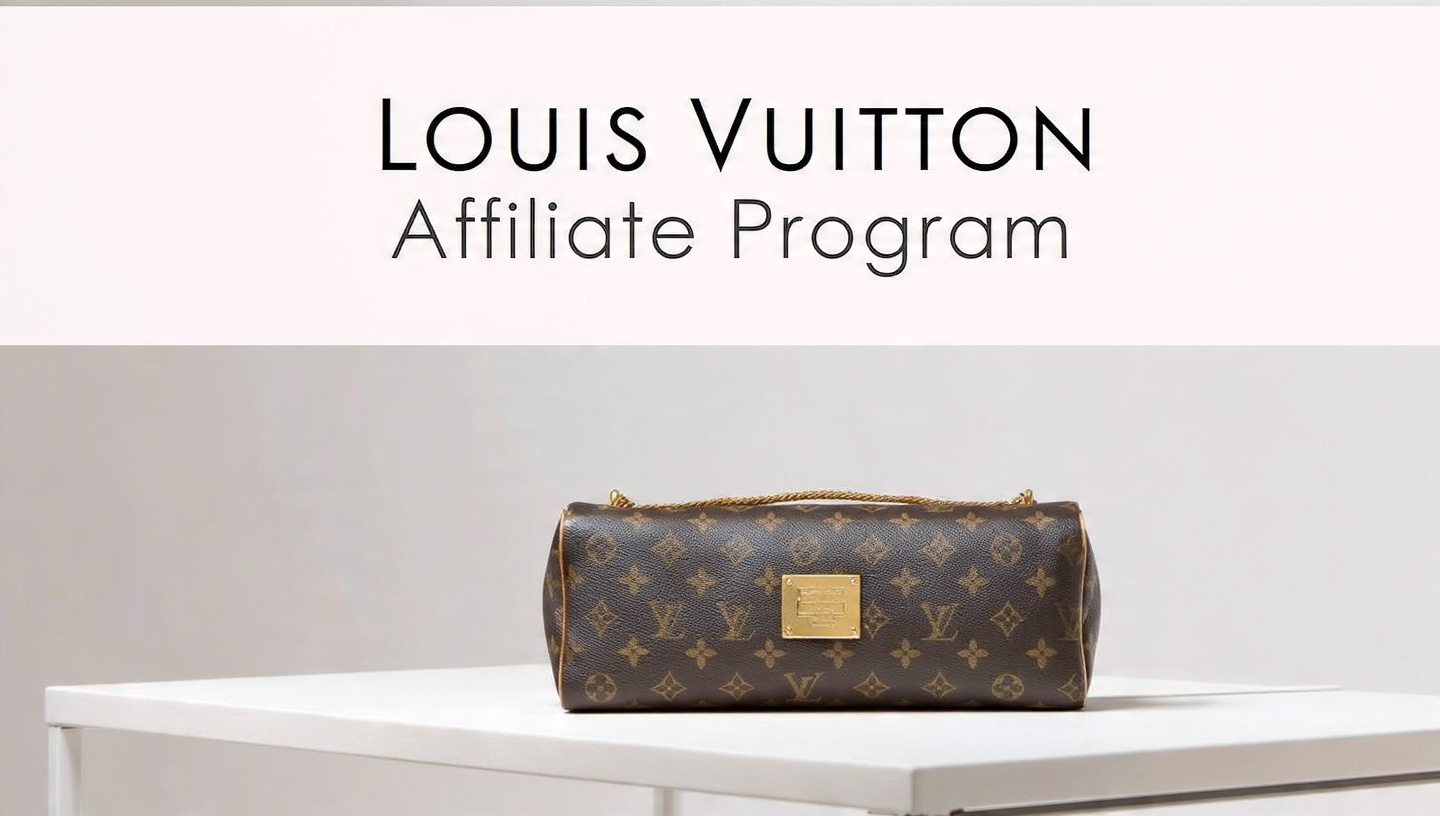
Louis Vuitton Affiliate Program: Does Luxury Fashion Pay Off?

louis-vuitton-affiliate-program

Luxury fashion has always had a certain magic to it.

The name Louis Vuitton instantly brings to mind iconic monogram canvas, beautifully crafted handbags, sophisticated luggage, designer shoes, accessories, watches, jewelry, and the unmistakable feeling of owning something that represents decades of fashion heritage.

For affiliate marketers, that naturally raises an interesting question:

Can you make money by promoting Louis Vuitton products?

At first glance, the answer seems obvious. If a customer purchases a luxury handbag worth several thousand dollars, even a modest affiliate commission could potentially produce an attractive payout.

But there is an important catch.

Unlike many fashion retailers, Louis Vuitton does not appear to operate a broadly available, official public affiliate program for ordinary bloggers and creators as of 2026. Several affiliate-industry sources specifically report that Louis Vuitton does not currently offer a conventional public affiliate program, while some websites continue to make claims that affiliates can sign up directly.

That distinction matters enormously.

So, if you are researching the “Louis Vuitton Affiliate Program” because you want to build a luxury-fashion affiliate website, this article will help you understand what is actually possible, how to avoid misleading offers, why luxury fashion can still be an excellent affiliate niche, and which strategies can let you monetize Louis Vuitton-related content without pretending that an official LV affiliate program exists.

Let’s take a friendly, honest look at the opportunity.


The Short Answer: Is There a Louis Vuitton Affiliate Program?

The most important thing to understand is this:

There does not appear to be a currently active, publicly accessible Louis Vuitton affiliate program that bloggers can simply join through an official Louis Vuitton affiliate signup page.

This is especially important because you will find websites, videos, and articles claiming otherwise.

Some pages say that Louis Vuitton offers an invitation-only program. Others claim that you can apply through a particular affiliate network. Still others publish supposed commission rates and application instructions.

The problem is that these claims are not consistently supported by an official Louis Vuitton source.

One affiliate-industry publication went as far as publishing a warning in March 2025 stating that Louis Vuitton does not have an affiliate program and advising marketers to be cautious about websites claiming otherwise.

Admitad also currently lists its Louis Vuitton offer as inactive.

So, rather than telling you that you can simply sign up, get a tracking link, promote LV bags, and collect commissions, the more accurate approach is:

Louis Vuitton itself is not currently a straightforward public affiliate opportunity, but Louis Vuitton-related luxury-fashion content can still be monetized through legitimate third-party retailers, marketplaces, affiliate networks, advertising, sponsorships, and other partnerships.

And that is where things get interesting.


Why Do So Many People Search for the Louis Vuitton Affiliate Program?

There is a very good reason the topic attracts affiliate marketers.

Louis Vuitton sells products at price points that are dramatically higher than ordinary fashion retailers.

A consumer might spend hundreds of dollars on a mainstream handbag.

A Louis Vuitton customer may spend thousands.

That creates an appealing mathematical possibility for affiliates.

Imagine, purely as an example, that a retailer paid a 5% commission on a $2,000 purchase.

The affiliate would earn:

$2,000 × 5% = $100

A $100 commission from one sale sounds fantastic compared with earning a few dollars from inexpensive products.

Now imagine generating 20 qualifying sales:

20 × $100 = $2,000

This is the basic reason luxury affiliate marketing looks so attractive.

But there is a crucial lesson:

High product prices do not automatically mean high affiliate commissions.

The retailer determines the commission.

The affiliate network determines the tracking rules.

The merchant determines which products qualify.

Returns can reverse commissions.

Some purchases may be excluded.

And, most importantly in this case, a brand may choose not to operate a public affiliate program at all.

So never calculate your expected income based on a hypothetical Louis Vuitton commission rate unless you have verified that rate through the actual merchant or affiliate network.


What Makes Louis Vuitton So Attractive to Luxury-Fashion Publishers?

Even without a conventional public affiliate program, Louis Vuitton remains a powerful content subject.

Why?

Because people don’t simply search for Louis Vuitton products.

They search for information about Louis Vuitton.

That distinction is extremely valuable for publishers.

People search for topics such as:

  • Louis Vuitton bag reviews
  • Best Louis Vuitton bags
  • Louis Vuitton Neverfull review
  • Louis Vuitton Speedy comparison
  • Louis Vuitton bags worth buying
  • Louis Vuitton bags for work
  • Louis Vuitton bags for travel
  • Louis Vuitton handbag alternatives
  • Louis Vuitton vs Gucci
  • Louis Vuitton vs Chanel
  • How to authenticate Louis Vuitton
  • Best designer handbags
  • Louis Vuitton investment bags
  • Louis Vuitton pre-owned bags
  • Louis Vuitton vintage bags
  • Louis Vuitton bag sizes
  • Louis Vuitton bag care
  • Louis Vuitton gifts
  • Luxury handbags for women
  • Designer handbags under $2,000
  • Best luxury handbags for beginners

These searches reveal something important.

The audience isn’t necessarily looking for a Louis Vuitton product immediately.

They may be researching.

They may be comparing.

They may be deciding whether to buy.

They may be looking for alternatives.

They may be interested in second-hand luxury.

And every one of those stages creates a potential monetization opportunity.


The Luxury Fashion Affiliate Funnel

A successful luxury-fashion website should not think only about the final purchase.

Think about the entire customer journey.

A reader might discover your website through an informational article.

Then read a comparison.

Then visit a product guide.

Then click to a retailer.

Then eventually make a purchase.

Your job as a publisher is to become useful at each stage.

A simple funnel might look like this:

Google search → Helpful article → Product comparison → Retailer recommendation → Affiliate click → Purchase → Commission

For example:

Stage 1: Awareness

Someone searches:

“Best luxury handbags for working women.”

They discover your article.

Stage 2: Research

Your article compares:

  • Louis Vuitton
  • Gucci
  • Prada
  • Saint Laurent
  • Coach
  • Celine

Stage 3: Consideration

The reader clicks your article:

“Best Louis Vuitton Alternatives That Still Feel Luxurious.”

Stage 4: Commercial Intent

The reader explores several retailers.

Stage 5: Purchase

The customer buys through a legitimate affiliate partner.

Stage 6: Commission

You receive a commission if the merchant’s program terms allow it.

This approach is much more sustainable than trying to force every article to sell a Louis Vuitton product.


Does Louis Vuitton Being a Luxury Brand Make Affiliate Marketing Easier?

Not necessarily.

In some ways, luxury makes affiliate marketing harder.

Let’s look at both sides.

The Advantages

Luxury products offer:

  • High average order values
  • Strong brand recognition
  • Emotional purchasing behavior
  • Highly searchable product names
  • Strong visual appeal
  • Evergreen products
  • Gift potential
  • Comparison opportunities
  • Resale interest
  • Collector interest
  • Fashion-editorial opportunities

A single high-value purchase can potentially be worth much more than dozens of inexpensive purchases.


The Disadvantages

Luxury affiliate marketing also comes with challenges.

1. Lower conversion rates

A reader may love a $2,000 handbag but not actually purchase it.

Luxury shoppers often take their time.

2. Trust matters enormously

People are understandably cautious when spending thousands of dollars online.

3. Counterfeit concerns

Designer goods are heavily copied.

This means your website must be extremely careful about recommending sellers.

4. Brand restrictions

Luxury brands can have strict advertising and trademark policies.

5. Limited affiliate availability

The brand itself may not offer a conventional public affiliate program.

6. Returns can be expensive

Luxury fashion has significant return and exchange considerations.

7. Competition is intense

Established fashion publications, luxury magazines, retailers, and major publishers already dominate many searches.

So luxury affiliate marketing is not simply:

“Find expensive products → add affiliate links → make money.”

It requires trust, authority, content quality, and patience.


The Biggest Mistake: Believing Every “Louis Vuitton Affiliate Program” Page

This deserves its own section.

Because the Louis Vuitton brand is so recognizable, it can become a magnet for misleading affiliate claims.

You may encounter pages saying things such as:

“Join the official Louis Vuitton affiliate program.”

Or:

“Earn 10% commission promoting Louis Vuitton.”

Or:

“Sign up today and receive your Louis Vuitton affiliate dashboard.”

Be extremely careful.

Some third-party websites publish affiliate-program information without demonstrating that the program is currently active or officially authorized.

For example, one website currently makes detailed claims about an LV affiliate program, while other sources report that there is no official public program.

That conflict itself is a warning sign.

When researching affiliate programs, always prioritize:

  1. The brand’s official website
  2. The affiliate network’s official merchant listing
  3. Official program documentation
  4. Current terms and conditions
  5. Verified merchant announcements

Do not rely solely on a random blog post.


How to Verify an Affiliate Program

Before promoting any luxury brand, use a simple verification process.

Step 1: Visit the official brand website

Start with the actual brand.

For Louis Vuitton, the safest place to verify brand information is the official Louis Vuitton website.

Louis Vuitton official website

Look for:

  • Affiliate information
  • Partnerships
  • Creator programs
  • Press information
  • Business partnerships
  • Legal notices

Step 2: Search major affiliate networks

If a brand doesn’t advertise an affiliate program publicly, check established networks.

Examples include:

  • Awin
  • CJ Affiliate
  • Rakuten Advertising
  • Impact
  • FlexOffers

Awin describes itself as a global affiliate platform connecting publishers and advertisers.

Rakuten Advertising similarly operates an affiliate ecosystem connecting brands and publishers.

CJ Affiliate provides another major partnership network.

But remember:

The existence of an affiliate network does not mean Louis Vuitton is necessarily available on that network.


Step 3: Check the actual merchant listing

Don’t stop at the network’s homepage.

You need to locate the specific merchant.

Look for:

  • Merchant name
  • Program status
  • Commission
  • Cookie duration
  • Geographic restrictions
  • Eligible products
  • Promotional restrictions
  • Brand bidding rules
  • Coupon rules
  • PPC restrictions

Step 4: Don’t Pay to Join

A legitimate affiliate program generally should not require you to send money simply to become an affiliate.

If somebody tells you:

“Pay $99 to unlock the Louis Vuitton affiliate dashboard.”

Stop.

If somebody asks you for:

  • Banking passwords
  • Cryptocurrency deposits
  • Membership fees
  • “Activation payments”
  • Recruitment payments
  • Personal account passwords

Treat it as a serious warning sign.


Why Would a Luxury Brand Avoid a Traditional Affiliate Program?

This is where luxury marketing becomes fascinating.

Affiliate marketing is based on performance.

A publisher promotes products.

A customer clicks.

A sale happens.

The publisher earns a commission.

It sounds simple.

But luxury brands often have a different approach to marketing.

They may place enormous emphasis on:

  • Brand positioning
  • Exclusivity
  • Controlled distribution
  • Customer experience
  • Visual identity
  • Pricing consistency
  • Direct relationships
  • Physical boutiques
  • Brand storytelling
  • Clienteling
  • Carefully selected partnerships

A mass affiliate program can potentially introduce the brand into thousands of websites, coupon sites, comparison pages, deal communities, and promotional environments.

That may not fit every luxury brand’s strategy.


Luxury Is About More Than Selling Products

Imagine two advertisements.

Advertisement A says:

“BUY THIS BAG — 15% OFF!”

Advertisement B tells a story about craftsmanship, heritage, design, travel, culture, and timeless style.

Luxury brands often prefer the second type of communication.

That doesn’t mean affiliates have no place in luxury.

It means the right affiliate publisher often looks more like a trusted editorial publication, fashion creator, stylist, or luxury-content specialist than a generic coupon website.


Can You Still Make Money From Louis Vuitton Content?

Absolutely.

And this is where affiliate marketers should think strategically.

You don’t necessarily need a direct Louis Vuitton affiliate relationship to build a profitable business around luxury fashion.

There are several legitimate approaches.


Strategy 1: Promote Authorized Luxury Retailers

Instead of sending readers directly to Louis Vuitton, you can create content around luxury retailers that legitimately sell designer products and operate affiliate programs.

The key is to verify:

  • The retailer is legitimate
  • Products are authentic
  • The retailer is authorized or reputable
  • The affiliate program is currently active
  • The products you promote qualify for commission

This can be a much safer monetization strategy.


Strategy 2: Focus on Pre-Owned Luxury

This is one of the most interesting opportunities.

The pre-owned luxury market allows publishers to create content around:

  • Used Louis Vuitton bags
  • Vintage Louis Vuitton
  • Pre-owned designer handbags
  • Luxury resale
  • Authentication
  • Condition grading
  • Vintage collections
  • Buying guides
  • Resale value

Some luxury resale businesses have affiliate programs.

For example, FlexOffers lists an affiliate program for The Luxury Closet, a luxury resale marketplace offering designer handbags, shoes, and jewelry, including Louis Vuitton products.

This creates an important distinction:

You may not be able to earn a commission from Louis Vuitton itself, but you may be able to earn commissions from legitimate retailers that sell Louis Vuitton products.

That is a much more realistic affiliate strategy.


Strategy 3: Build a Luxury Handbag Comparison Website

This could be a powerful long-term SEO strategy.

Instead of creating hundreds of pages about one brand, create a complete luxury handbag information hub.

For example:

Louis Vuitton vs Chanel

Compare:

  • Price
  • Materials
  • Heritage
  • Design
  • Resale potential
  • Durability
  • Everyday usability
  • Formal occasions
  • Travel
  • Brand recognition

Then create:

Louis Vuitton vs Gucci

Then:

Louis Vuitton vs Prada

Then:

Louis Vuitton vs Saint Laurent

Then:

Best Luxury Handbags for Work

Then:

Best Designer Bags for Travel

Then:

Best Luxury Bags Under $2,000

This creates a network of commercially valuable content.


Strategy 4: Create “Alternative to Louis Vuitton” Content

This is especially useful when the official product cannot be monetized directly.

Suppose someone searches:

“Louis Vuitton Neverfull alternative.”

They may be interested in:

  • Similar tote bags
  • Luxury alternatives
  • Affordable alternatives
  • Designer alternatives
  • Leather totes
  • Travel totes
  • Work bags

You can create a helpful comparison and monetize legitimate alternative products.

The important thing is to be transparent.

Don’t pretend an alternative is made by Louis Vuitton.

Don’t use confusing branding.

Instead, explain why the alternative might appeal to someone who likes a particular LV design.


Strategy 5: Use Pinterest to Drive Luxury Fashion Traffic

Pinterest can be particularly useful for fashion publishers because the platform is highly visual.

You can create pins around:

  • Luxury handbag inspiration
  • Designer handbag guides
  • Louis Vuitton styling ideas
  • Luxury travel accessories
  • Designer bag comparisons
  • Capsule wardrobes
  • Quiet luxury
  • Classic handbag collections
  • Luxury gift guides

A Pinterest user might discover:

“10 Timeless Designer Bags Worth Considering.”

That pin leads to your website.

Your website then provides:

  • Detailed comparisons
  • Product recommendations
  • Retailer links
  • Buying advice

This turns visual discovery into affiliate traffic.


Strategy 6: Build a YouTube Channel

Luxury fashion is incredibly visual.

That makes YouTube another strong channel.

Possible video topics include:

  • Best Louis Vuitton bags for beginners
  • Louis Vuitton bag comparison
  • Designer bags worth the money
  • Louis Vuitton alternatives
  • Luxury handbags for work
  • Luxury handbags under $2,000
  • How to buy pre-owned designer bags
  • How to evaluate a luxury reseller
  • Designer bag buying mistakes
  • Luxury handbag trends

Your video can direct viewers to a detailed article containing affiliate links to legitimate participating retailers.


Strategy 7: Create Email Content

Don’t overlook email.

Suppose someone finds your article:

“Best Luxury Handbags for Everyday Use.”

Instead of trying to immediately force a sale, offer a useful free resource such as:

“The Beginner’s Guide to Buying a Designer Handbag.”

Then build an email list.

Your emails can cover:

  • New luxury releases
  • Handbag guides
  • Designer comparisons
  • Care tips
  • Shopping advice
  • Resale insights
  • Gift guides
  • Seasonal fashion

When you have legitimate affiliate partnerships, email can become an additional sales channel.

Always follow the applicable email marketing and disclosure requirements in your target markets.


How Much Can You Earn With Luxury Affiliate Marketing?

This is where we need to avoid unrealistic promises.

There is no guaranteed income.

Your earnings depend on:

  • Traffic
  • Audience quality
  • Conversion rate
  • Average order value
  • Commission rate
  • Merchant terms
  • Cookie duration
  • Return rate
  • Geography
  • Content quality
  • Search rankings
  • Seasonal demand

The basic formula is:

Affiliate revenue = clicks × conversion rate × average order value × commission rate

Let’s create a hypothetical example.

Suppose your website generates:

10,000 monthly commercial-intent visitors

Suppose:

10% click a retailer link

That gives you:

1,000 clicks

Suppose:

2% purchase

That’s:

20 orders

Suppose average order value is:

$1,500

Total referred sales:

20 × $1,500 = $30,000

If the hypothetical commission were 5%:

$30,000 × 5% = $1,500

Again, this is only a mathematical example.

It is not a claim about Louis Vuitton’s commission rate.

And it demonstrates something important:

You don’t necessarily need enormous traffic.

You need high-quality commercial traffic.


Why Search Intent Matters More Than Traffic

Imagine two websites.

Website A

100,000 visitors every month.

Most visitors read general fashion news.

Website B

10,000 visitors every month.

Most visitors search:

  • Best luxury handbag
  • Designer bag comparison
  • Buy pre-owned Louis Vuitton
  • Best luxury tote
  • Luxury handbag under $3,000

Website B may be much more valuable to an affiliate business.

Why?

Because the audience has stronger buying intent.

This is one of the most important lessons in affiliate marketing.

Traffic is not the business model. Intent is.


The Best Louis Vuitton Keywords for Affiliate Content

If you’re building an SEO site around the topic, think in clusters.

Informational Keywords

  • Louis Vuitton history
  • Louis Vuitton bag guide
  • Louis Vuitton materials
  • Louis Vuitton bag sizes
  • Louis Vuitton handbag styles
  • Louis Vuitton care guide
  • Louis Vuitton bag terminology

Commercial Keywords

  • Best Louis Vuitton bags
  • Best Louis Vuitton bags for women
  • Best Louis Vuitton bags for work
  • Best Louis Vuitton bags for travel
  • Louis Vuitton bag comparison
  • Louis Vuitton bag review

Comparison Keywords

  • Louis Vuitton vs Chanel
  • Louis Vuitton vs Gucci
  • Louis Vuitton vs Prada
  • Louis Vuitton vs Celine
  • Louis Vuitton vs Saint Laurent

Alternative Keywords

  • Louis Vuitton alternatives
  • Louis Vuitton Neverfull alternatives
  • Affordable Louis Vuitton alternatives
  • Designer tote alternatives
  • Luxury handbag alternatives

Resale Keywords

  • Buy pre-owned Louis Vuitton
  • Vintage Louis Vuitton bags
  • Louis Vuitton resale
  • Louis Vuitton resale value
  • Best places to buy pre-owned Louis Vuitton

These keyword groups can become the foundation of an entire website.


Content Ideas for a Louis Vuitton Affiliate Website

If you want to build a luxury fashion blog, here are dozens of article ideas.

Beginner Guides

  1. Louis Vuitton Bags: A Beginner’s Guide
  2. How to Choose Your First Designer Handbag
  3. What Makes Louis Vuitton So Popular?
  4. Louis Vuitton Bag Styles Explained
  5. How Louis Vuitton Sizing Works
  6. A Beginner’s Guide to Luxury Handbags
  7. How to Care for Designer Handbags
  8. How to Store Luxury Handbags Properly

Comparison Articles

  1. Louis Vuitton vs Chanel
  2. Louis Vuitton vs Gucci
  3. Louis Vuitton vs Prada
  4. Louis Vuitton vs Saint Laurent
  5. Louis Vuitton vs Celine
  6. Louis Vuitton vs Dior
  7. Designer Tote Bags Compared
  8. Luxury Handbags Compared by Price

Buying Guides

  1. Best Luxury Handbags for Work
  2. Best Designer Bags for Travel
  3. Best Luxury Handbags for Everyday Use
  4. Best Designer Bags for Beginners
  5. Best Luxury Handbags Under $1,000
  6. Best Luxury Handbags Under $2,000
  7. Best Designer Bags for Minimalists
  8. Best Luxury Bags for Mothers
  9. Best Luxury Bags for Professionals

Resale Content

  1. How to Buy Pre-Owned Luxury Bags
  2. Best Places to Buy Pre-Owned Designer Bags
  3. New vs Pre-Owned Luxury Handbags
  4. How Luxury Bag Resale Works
  5. How to Research a Luxury Reseller
  6. Vintage Designer Bags Worth Considering

Style Content

  1. How to Style a Designer Tote
  2. Luxury Handbags for a Capsule Wardrobe
  3. Classic Handbags That Never Go Out of Style
  4. Designer Bags for Quiet Luxury Outfits
  5. Luxury Bags for Minimalist Wardrobes
  6. How to Build a Designer Handbag Collection

What About Louis Vuitton “Investment” Bags?

Investment-related fashion content can attract considerable interest.

People frequently ask whether certain luxury handbags hold their value.

But be careful with the language.

A handbag isn’t automatically an investment simply because it is expensive.

Its resale value can depend on:

  • Condition
  • Model
  • Size
  • Color
  • Material
  • Age
  • Availability
  • Demand
  • Packaging
  • Accessories
  • Authenticity
  • Market conditions

Instead of writing:

“This Louis Vuitton bag will make you money.”

A more responsible headline would be:

“Louis Vuitton Bags With Strong Resale Appeal: What Buyers Should Know.”

That framing is more credible and avoids promising financial returns.


Authenticity Content Can Build Trust

Luxury counterfeit products are a major concern for consumers.

That makes educational content particularly valuable.

You can create articles covering:

  • How authentication works
  • Why authenticity matters
  • How to evaluate a reseller
  • What documentation means
  • Why receipts alone may not prove authenticity
  • Common counterfeit warning signs
  • How professional authentication services work

However, avoid presenting yourself as an authentication expert unless you genuinely have the necessary qualifications and expertise.

Luxury shoppers are putting significant amounts of money at risk.

Your website should help them make safer, better-informed decisions.


The Importance of Trust in Luxury Affiliate Marketing

Trust is perhaps your biggest asset.

Imagine you are recommending a $25 product.

A reader may make an impulse purchase.

Now imagine recommending a $3,000 handbag.

The reader is going to ask:

“Why should I trust you?”

Your website should answer that question.

Show:

  • Clear disclosures
  • Real research
  • Accurate information
  • Updated prices
  • Transparent comparisons
  • Honest pros and cons
  • Legitimate retailers
  • Clear affiliate relationships

Don’t write:

“This is absolutely the best bag in the world!”

Instead write:

“This bag may be particularly appealing if you prioritize durability, classic styling, and a recognizable luxury aesthetic.”

That sounds more professional.


Affiliate Disclosure Is Essential

If you earn commissions from links, tell your readers.

A simple disclosure could say:

Affiliate Disclosure: Some links on this website may be affiliate links. If you make a purchase through one of these links, we may earn a commission at no additional cost to you.

Keep the disclosure easy to find and understand.

Transparency doesn’t hurt affiliate marketing.

In many cases, it increases trust.


Don’t Pretend a Third-Party Retailer Is Louis Vuitton

This is another critical point.

If you are promoting a reseller or marketplace carrying Louis Vuitton products, clearly identify the seller.

For example:

“This retailer sells pre-owned Louis Vuitton products.”

Do not say:

“Buy Louis Vuitton directly here.”

unless the customer is actually being directed to an official Louis Vuitton channel.

This distinction is especially important in luxury fashion because counterfeit and unauthorized-sale concerns can damage both your audience and your reputation.


How to Choose Luxury Affiliate Partners

When searching for alternatives to a direct Louis Vuitton affiliate program, evaluate each partner carefully.

1. Reputation

Search for:

  • Customer reviews
  • Complaints
  • Independent coverage
  • Business history

2. Authenticity

Understand how the retailer sources and authenticates luxury goods.

3. Affiliate terms

Check:

  • Commission
  • Cookie period
  • Attribution rules
  • Return policy
  • Payment threshold

4. Product selection

A retailer with a large luxury catalog may provide more content opportunities.

5. Geography

Check whether the retailer ships to your audience.

6. Brand restrictions

Some affiliate programs restrict:

  • PPC
  • Trademark bidding
  • Coupon websites
  • Email
  • Paid social
  • Display advertising

Always read the terms.


Could Luxury Fashion Be Better Than General Affiliate Marketing?

It can be, but only for the right publisher.

Luxury fashion has a fascinating combination of:

High order values + strong emotional appeal + powerful brands + visual content + evergreen searches.

But the audience is smaller than mass-market retail.

A website about $20 handbags may have a gigantic potential audience.

A website about $5,000 handbags has a smaller audience.

However, that smaller audience may have significantly higher purchasing power.

This is why luxury affiliate marketing is often a quality-over-quantity game.


Louis Vuitton vs Other Luxury Affiliate Opportunities

If your ultimate goal is affiliate income, don’t become obsessed with one brand.

The better strategy is to build a luxury ecosystem.

Your website could cover:

  • Louis Vuitton
  • Gucci
  • Prada
  • Dior
  • Saint Laurent
  • Celine
  • Burberry
  • Coach
  • Tory Burch
  • Michael Kors
  • luxury resale platforms
  • premium department stores
  • designer accessories

Then your revenue doesn’t depend on one merchant.

This is an important business principle:

Don’t build your entire income stream around a program you don’t control.


The “Luxury Fashion Hub” Strategy

Instead of creating a website called something like:

Louis Vuitton Affiliate Deals

build something broader and more authoritative.

For example:

The Luxury Handbag Guide

Your site could contain:

Category 1: Designer Bags

Detailed brand guides.

Category 2: Buying Guides

Best bags for different situations.

Category 3: Comparisons

Brand-vs-brand content.

Category 4: Pre-Owned Luxury

Resale and authentication education.

Category 5: Fashion

Styling and wardrobe advice.

Category 6: Care

How to protect and maintain luxury goods.

Category 7: Gift Guides

Luxury gifts for birthdays, anniversaries, weddings, and holidays.

This gives you far more monetization opportunities.


Why Gift Guides Can Be Powerful

Luxury products make excellent gift-guide subjects.

Consider articles such as:

  • Best Luxury Gifts for Her
  • Luxury Birthday Gifts
  • Luxury Anniversary Gifts
  • Designer Gifts Under $500
  • Designer Gifts Under $1,000
  • Luxury Gifts for New Mothers
  • Luxury Gifts for Fashion Lovers
  • Best Designer Wallets for Gifts
  • Luxury Travel Gifts

Gift-related searches can have strong commercial intent.

And unlike trend articles, many gift guides can remain useful year after year.


Seasonal Luxury Affiliate Marketing

Luxury fashion has natural seasonal opportunities.

January

  • New-year wardrobe
  • Designer sales research
  • Winter accessories

February

  • Valentine’s Day gifts
  • Luxury jewelry
  • Designer handbags

March–April

  • Spring fashion
  • Mother’s Day
  • Travel accessories

May–June

  • Wedding gifts
  • Graduation gifts
  • Summer travel

July–August

  • Vacation accessories
  • Summer handbags
  • Resort fashion

September

  • Fall fashion
  • New-season trends

October–December

  • Holiday gifts
  • Black Friday alternatives
  • Christmas luxury gifts
  • New Year accessories

A strong affiliate website can plan its editorial calendar months ahead.


Don’t Depend Entirely on Google

SEO is powerful.

But algorithms change.

A better strategy is to build multiple traffic sources.

Consider:

  • Google
  • Pinterest
  • YouTube
  • Instagram
  • TikTok
  • Email
  • Direct traffic
  • Social communities

For luxury fashion, visual channels can be particularly useful.

One beautiful handbag comparison graphic can generate traffic long after publication.


How Pinterest Can Fit Into the Strategy

Imagine publishing:

“15 Classic Designer Handbags That Never Go Out of Style.”

You could create multiple Pinterest graphics:

  • Classic designer handbags
  • Best luxury bags
  • Timeless handbags
  • Designer handbag guide
  • Luxury capsule wardrobe
  • Best bags for work

Each pin leads back to the same comprehensive article.

You are essentially creating multiple entrances into one piece of content.


How YouTube Can Fit Into the Strategy

Create a video:

“Louis Vuitton vs Chanel: Which Luxury Bag Brand Is Right for You?”

Then explain:

  • Price
  • Style
  • Heritage
  • Practicality
  • Resale
  • Everyday use

At the end, send viewers to your detailed comparison article.

That article can contain your legitimate affiliate links.

Now one piece of content works across:

  • YouTube
  • Google
  • Pinterest
  • Email

This is much more efficient than creating completely separate content for every platform.


How to Build an Affiliate Content Cluster

Here’s a practical example.

Start with a pillar page:

The Complete Guide to Luxury Handbags

Then create supporting articles:

  • Best Luxury Handbags
  • Best Designer Bags for Work
  • Louis Vuitton Bag Guide
  • Chanel Bag Guide
  • Gucci Bag Guide
  • Designer Bag Comparison
  • Pre-Owned Luxury Buying Guide
  • Luxury Bag Authentication Guide
  • Best Luxury Bags Under $2,000
  • Best Luxury Bags for Travel

Link them together.

This creates a strong topical structure.


Internal Linking Matters

Suppose you publish:

“Best Designer Bags for Work.”

Within that article, link to:

  • Louis Vuitton handbag guide
  • Best work totes
  • Luxury handbag care guide
  • Pre-owned designer bag guide
  • Designer handbag comparison

Then those articles link back.

This helps readers navigate your site and can strengthen your topical organization.


What Makes a Luxury Affiliate Article Convert?

A good article doesn’t just contain links.

It answers buying questions.

For every product or retailer you discuss, consider including:

Who is it for?

Is it ideal for:

  • Professionals?
  • Travelers?
  • Collectors?
  • First-time luxury buyers?

What are the advantages?

Explain the real benefits.

What are the drawbacks?

Don’t hide them.

What should readers compare?

Give alternatives.

Where can readers buy it?

Provide legitimate retailer options where appropriate.

Is it worth the price?

Explain the reasoning.

This creates a much better shopping experience.


Use Tables for Comparisons

Luxury shoppers love comparisons.

A simple comparison table might include:

FeatureBrand ABrand BBrand C
Price levelHighVery highHigh
StyleClassicMinimalistTrend-led
Best forEveryday useFormal occasionsFashion-forward buyers
Resale interestStrongStrongModerate
AudienceBroad luxuryUltra-luxuryContemporary luxury

The goal isn’t to declare one brand universally superior.

The goal is to help readers decide which option fits their needs.


Don’t Overpromise “Investment Returns”

This deserves repeating.

Avoid headlines such as:

“Buy These Bags and Get Rich.”

Luxury resale markets can change.

Fashion trends change.

Consumer preferences change.

Currency values change.

Economic conditions change.

Instead, write:

“Designer Bags With Strong Resale Appeal.”

That’s more credible.


Can Beginners Make Money in Luxury Affiliate Marketing?

Yes, but beginners should set realistic expectations.

You don’t need:

  • 1 million followers
  • A celebrity status
  • A luxury lifestyle
  • A giant budget

You do need:

  • A website or content platform
  • Strong writing
  • Good research
  • Consistency
  • Patience
  • Basic SEO
  • A clear niche
  • Legitimate monetization partners

In fact, pretending to live a luxury lifestyle can hurt your credibility.

You don’t have to own every handbag you discuss.

You can create excellent research-driven content.

Just be honest about what you’ve personally tested and what you’ve researched.


A Beginner-Friendly 90-Day Plan

Let’s make this practical.

Days 1–30: Build the Foundation

Choose your niche.

For example:

Luxury handbags and designer fashion.

Set up:

  • Website
  • About page
  • Contact page
  • Privacy policy
  • Affiliate disclosure
  • Editorial standards

Then publish approximately 10–15 useful articles.

Focus on informational topics.


Days 31–60: Add Commercial Content

Publish:

  • Comparison articles
  • Buying guides
  • Gift guides
  • Product alternatives
  • Pre-owned luxury guides

Start applying to legitimate affiliate programs relevant to your content.

Don’t apply randomly.

Choose programs that actually match your audience.


Days 61–90: Build Traffic

Start:

  • Pinterest
  • YouTube
  • Email
  • Social content

Improve existing articles.

Add:

  • Tables
  • FAQs
  • Images
  • Better internal links
  • Product comparisons
  • Clear calls to action

Study which pages receive the most traffic.

Then create more content around those topics.


What Should Your Calls to Action Look Like?

Avoid aggressive sales language.

Luxury shoppers don’t necessarily respond well to:

“BUY NOW!!!”

Instead try:

  • “Explore the current collection”
  • “Compare available options”
  • “View the retailer’s selection”
  • “Check current availability”
  • “See today’s options”
  • “Browse pre-owned listings”

The tone should feel editorial rather than pushy.


Why Editorial Content Works Well for Luxury

Luxury purchases are emotional.

People buy with both logic and emotion.

They think:

“Is this practical?”

But they also think:

“Does this feel like me?”

“Will I love carrying this?”

“Does this fit my personal style?”

“Will I still like it years from now?”

A good luxury article addresses both sides.

Give readers the facts.

Then help them imagine how the product fits their lifestyle.


Don’t Ignore the Psychology of Luxury

Luxury products sell more than functionality.

They can represent:

  • Achievement
  • Identity
  • Taste
  • Celebration
  • Status
  • Craftsmanship
  • Heritage
  • Self-expression

This is why storytelling can be so powerful.

Instead of saying:

“This is a leather handbag.”

you might discuss:

  • Its design language
  • Its intended use
  • Its heritage
  • Its styling versatility
  • Its place within a wardrobe

Good affiliate content makes shopping decisions easier and more enjoyable.


What If Louis Vuitton Launches an Affiliate Program Later?

This is an important possibility.

Brands change strategies.

A brand that doesn’t have a public affiliate program today could introduce partnerships later.

Therefore, if you are building a luxury-fashion website now, you don’t need to abandon Louis Vuitton content.

Quite the opposite.

Build the audience first.

Build topical authority.

Create useful content.

Grow your email list.

Build social channels.

Develop relationships with luxury retailers.

Then, if Louis Vuitton eventually launches an official program, you’ll already have an established audience.

That’s far more valuable than waiting around for an affiliate signup page.


What About Influencer Partnerships?

Affiliate marketing isn’t the only partnership model.

Luxury brands can work with:

  • Influencers
  • Creators
  • Stylists
  • Publications
  • Editorial partners
  • Events
  • Brand ambassadors

However, don’t assume that seeing influencers wearing Louis Vuitton means they are affiliates.

They may have:

  • Purchased the item themselves
  • Received a gift
  • Been paid for a campaign
  • Worked with an agency
  • Participated in another type of partnership

Affiliate marketing is only one possible relationship.


Affiliate Marketing vs Sponsorship

These are different.

Affiliate Marketing

You generally earn when your referral generates a qualifying action.

Sponsorship

A brand pays for agreed promotional exposure or content.

Brand Ambassador

A longer-term relationship may involve content, events, appearances, or other activities.

PR/Gifting

A creator may receive products without receiving a commission.

Understanding these differences helps you avoid making incorrect assumptions about luxury brand partnerships.


Is Louis Vuitton the Best Luxury Affiliate Niche?

Not necessarily.

It may be one of the most recognizable luxury brands, but recognition alone doesn’t make a program profitable.

A better question is:

“Which luxury-fashion merchants offer a combination of strong products, reasonable commissions, reliable tracking, and good conversion rates?”

That is the question an affiliate marketer should actually be asking.


What Makes a Luxury Affiliate Program Attractive?

Look for:

Strong average order value

Higher order values can make percentage commissions more meaningful.

Competitive commission

A high-ticket product with a tiny commission may still be less attractive than a lower-priced product with a much better rate.

Good conversion rate

If visitors don’t buy, the commission doesn’t matter.

Long cookie duration

A longer attribution window can help when customers take time to decide.

Good product feed

Useful product information makes content creation easier.

Strong brand reputation

Trust improves conversion.

Reliable tracking

You want accurate attribution.

Fair return policies

Returns can affect commissions.


A Simple Affiliate Profitability Scorecard

You can score potential programs from 1 to 5.

FactorScore
Commission/5
Average order value/5
Conversion potential/5
Brand reputation/5
Cookie duration/5
Product selection/5
Geographic availability/5
Affiliate support/5
Tracking reliability/5
Content opportunities/5

Add the scores.

A program scoring 40/50 may deserve more attention than one scoring 25/50, even if the second has more famous products.


The Real Lesson From the Louis Vuitton Affiliate Question

The most valuable lesson isn’t actually about Louis Vuitton.

It’s about affiliate marketing itself.

Never confuse product popularity with affiliate availability.

A famous company can have:

  • No affiliate program
  • A private program
  • An invitation-only partnership
  • A limited regional program
  • A creator program
  • A traditional sponsorship model
  • No external affiliate relationships whatsoever

Your job is to verify the opportunity before building your business around it.


Should You Build a Website Around “Louis Vuitton Affiliate Program”?

Probably not.

At least not as your entire business.

The keyword may attract people searching for affiliate information, but the monetization opportunity is uncertain.

A broader niche would be stronger.

Instead of:

Louis Vuitton Affiliate Program

consider:

Luxury Fashion Affiliate Marketing

Then build supporting content around:

  • Louis Vuitton
  • Chanel
  • Gucci
  • Prada
  • Dior
  • Celine
  • Saint Laurent
  • Luxury resale
  • Designer handbags
  • Luxury accessories

This gives you flexibility.


A Better Website Structure

Here’s one possible structure.

Home

Luxury Fashion Buying Guide

/designer-handbags/

General handbag content.

/louis-vuitton/

Louis Vuitton guides.

/chanel/

Chanel guides.

/gucci/

Gucci guides.

/designer-comparisons/

Brand comparisons.

/luxury-resale/

Pre-owned luxury content.

/buying-guides/

Commercial content.

/gift-guides/

Luxury gifts.

/fashion-care/

Maintenance and care.

This structure gives your site room to grow.


Common Mistakes to Avoid

Mistake 1: Publishing Fake Commission Rates

Don’t state:

“Louis Vuitton pays 10%.”

unless you have current official evidence.


Mistake 2: Linking to Unknown Affiliate Networks

If the website looks suspicious, don’t recommend it to your readers.


Mistake 3: Promising Guaranteed Income

Affiliate marketing is performance-based.

There are no guaranteed earnings.


Mistake 4: Using Misleading Brand Language

Don’t imply you represent Louis Vuitton unless you actually do.


Mistake 5: Ignoring Disclosures

Always clearly disclose affiliate relationships.


Mistake 6: Focusing Only on Product Pages

Informational content can bring people into your funnel.


Mistake 7: Chasing Only High-Volume Keywords

Low-volume, high-intent searches can be extremely valuable.


Mistake 8: Building a Website Around One Merchant

Programs can close, change commission rates, or change terms.

Diversification matters.


How to Make Luxury Content Feel Premium

If you’re entering luxury fashion, presentation matters.

Your website should feel:

  • Clean
  • Elegant
  • Organized
  • Trustworthy
  • Editorial
  • Helpful
  • Uncluttered

Avoid filling every paragraph with affiliate buttons.

Luxury content should feel like a magazine or expert buying guide, not a digital flea market.


Photography Matters

Luxury fashion is visual.

Use high-quality, properly licensed imagery.

Never simply copy images from Louis Vuitton or other fashion websites without permission.

Whenever possible, use:

  • Your own photography
  • Licensed stock photography
  • Official affiliate creative assets
  • Images provided through legitimate affiliate programs

Follow each merchant’s image-use requirements.


Build a Brand, Not Just an Affiliate Site

This may be the biggest piece of advice in this entire article.

Don’t think:

“How can I make money from Louis Vuitton?”

Think:

“How can I become a trusted source for luxury-fashion buying decisions?”

That’s a completely different mindset.

The first approach is transactional.

The second creates an actual business.


A Possible Revenue Model

A mature luxury-fashion website could eventually have multiple revenue streams.

Affiliate commissions

From legitimate retailers and luxury marketplaces.

Display advertising

For informational traffic.

Sponsored content

From appropriate fashion and lifestyle companies.

Brand collaborations

With relevant businesses.

Digital products

Such as:

  • Luxury handbag buying guides
  • Capsule wardrobe guides
  • Fashion planners

Email sponsorships

Once your newsletter becomes large enough.

YouTube revenue

From fashion content.

This diversification reduces dependence on one affiliate program.


Final Verdict: Does Luxury Fashion Pay Off?

Yes, luxury fashion can absolutely be a profitable affiliate niche.

But the answer is more complicated when the specific subject is Louis Vuitton.

As of 2026, there does not appear to be a broadly available, official Louis Vuitton affiliate program that ordinary bloggers can simply join through a public signup process. Affiliate-industry sources currently warn about misleading claims, and at least one affiliate network lists its Louis Vuitton offer as inactive.

That doesn’t mean the opportunity is dead.

It means you need to approach it differently.

Instead of building your business around the assumption that Louis Vuitton will pay you a commission for every handbag you recommend, build a broader luxury-fashion platform.

Cover:

  • Designer handbags
  • Luxury accessories
  • Brand comparisons
  • Buying guides
  • Pre-owned luxury
  • Resale
  • Fashion styling
  • Luxury gifts
  • Authentication education
  • Designer alternatives

Then monetize through verified, legitimate affiliate programs offered by retailers and marketplaces that actually accept affiliates.

For example, luxury resale platforms can provide opportunities to monetize content about pre-owned designer products; The Luxury Closet is one example of a luxury marketplace listed by FlexOffers with an affiliate program.

The real opportunity isn’t simply putting a Louis Vuitton link on a webpage.

It’s building trust with people who love luxury fashion.


The Bottom Line

Louis Vuitton is one of the world’s most recognizable luxury fashion names.

That makes it an incredibly valuable topic for content creators.

But brand popularity and affiliate-program availability are two different things.

If you’re starting an affiliate website, don’t fall into the trap of believing every article that promises easy Louis Vuitton commissions.

Verify everything.

Don’t publish unverified commission rates.

Don’t send your audience to suspicious signup pages.

Don’t pretend a third-party seller is Louis Vuitton.

And don’t build your entire business around one brand.

Instead, build something much more valuable:

A trusted luxury-fashion resource that helps readers discover, compare, research, and confidently purchase premium products.

That approach gives you something a questionable affiliate program never can:

a business you actually control.

Luxury fashion can pay off.

But the real money isn’t necessarily in finding a mythical “Louis Vuitton affiliate link.”

It’s in understanding the luxury shopper, creating genuinely useful content, building an audience, and connecting that audience with legitimate products and merchants at exactly the moment they’re ready to buy.

And honestly, that’s a much more exciting opportunity.

Leave a Reply

Your email address will not be published. Required fields are marked *