
To answer your question directly: ActiveCampaign will likely help you build a more qualified and engaged list faster through its powerful automation, while Constant Contact helps you build a larger list faster through its user-friendly, multi-channel capture tools. The “winner” depends entirely on whether you prioritize quantity or quality.
If you want to rapidly deploy sign-up forms across your website and social channels with minimal fuss, Constant Contact is your tool. If you want to build a system that automatically nurtures and segments subscribers based on their behavior, turning casual sign-ups into loyal customers, ActiveCampaign is the superior choice.
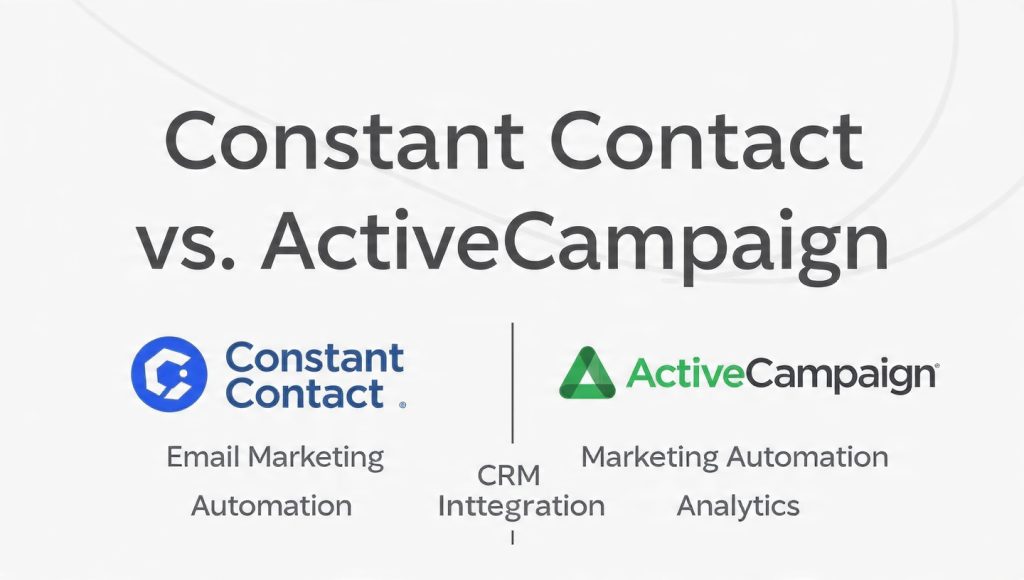
Here is a head-to-head comparison to clarify their core strengths in list building.
🚀 Deeper Dive: Two Philosophies on “Growing Your List”
The core difference lies in what each platform emphasizes as the path to growth.
Constant Contact: The Multi-Channel Capture Expert
Constant Contact’s approach to growing your list is to make the act of subscribing as easy and widespread as possible. It provides a rich toolkit to capture attention wherever your audience is .
- How it helps you grow faster: You can quickly deploy eye-catching pop-up forms on your website, create dedicated landing pages for campaigns, and even use the mobile app to collect emails offline at events via QR codes .
- Segmentation for Beginners: Once subscribers are in, you can organize them into lists based on where they signed up or their basic profile. This allows for targeted, but not deeply personalized, broadcasts .
- Best for: A local bakery, a nonprofit, or a consultant who wants to digitize their email list quickly with in-person sign-ups and simple newsletters. If your goal is to transition from a paper sign-up sheet to a digital list today, Constant Contact is the faster tool.
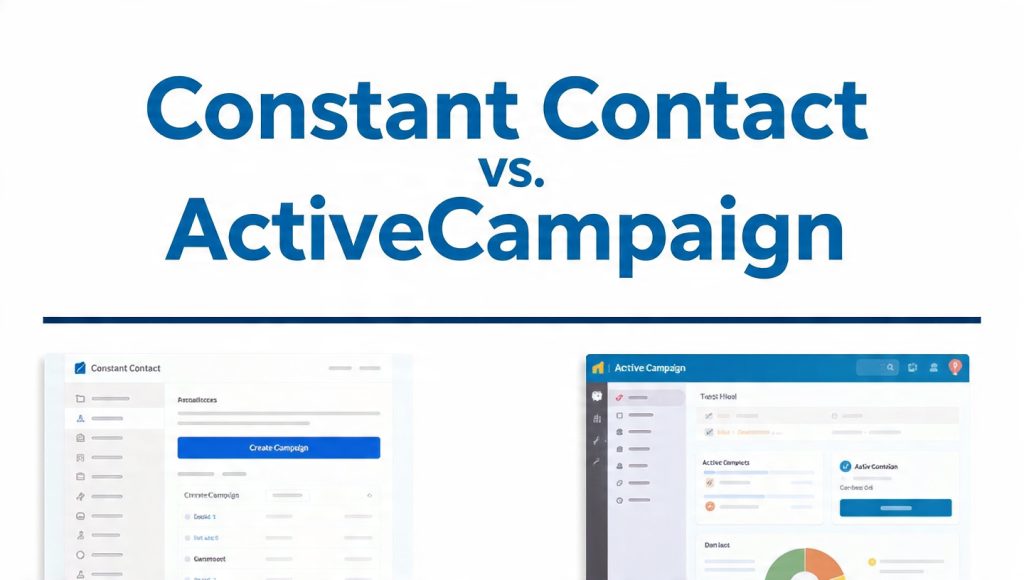
ActiveCampaign: The Intelligent Nurturing System
ActiveCampaign views list growth as a byproduct of building relationships. It focuses on creating an intelligent system that not only captures leads but also automatically understands and engages them to prevent list decay .
- How it helps you grow faster: While its form builder is standard, its true power is in automation. A new subscriber doesn’t just get added to a list; they can be instantly tagged based on their interests, entered into a personalized welcome sequence, and have their engagement tracked. This active nurturing builds trust and loyalty faster, turning a new contact into a customer more efficiently .
- AI as Your Growth Assistant: The recent introduction of “Active Intelligence” and various “Agents” is a game-changer . The Segments Agent can analyze your contacts and automatically build a precise audience (e.g., “customers who bought product X but haven’t opened an email in 3 months”) with a simple prompt. The Automations Agent then builds the entire win-back campaign for you. This automates the strategic work of growth, not just the tactical .
- Best for: An e-commerce brand, a B2B company, or an online course creator who needs to nurture leads through a sales funnel. If your goal is to build a list of people who are highly likely to buy from you, ActiveCampaign is the faster route to that outcome.
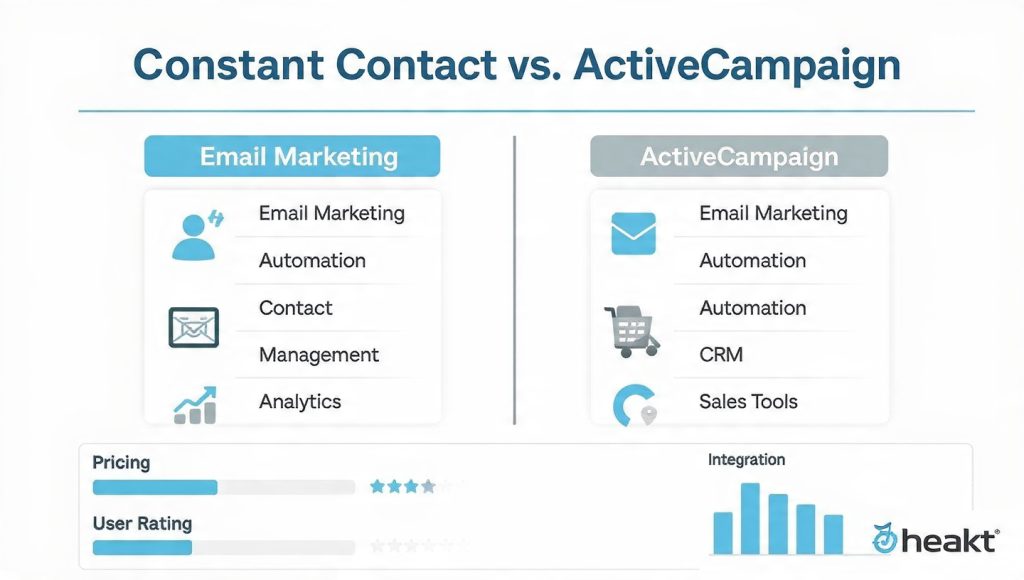
🤔 How to Choose Your List-Building Champion
Your decision hinges on the definition of “grow your list faster.”
- Choose Constant Contact if: You are a beginner or a small local business whose primary goal is to maximize the number of raw subscribers as quickly and easily as possible. You value simplicity, great customer support, and the ability to collect emails anywhere, from your website to a street fair .
- Choose ActiveCampaign if: You are an experienced marketer or a growing business focused on building a list of high-quality, engaged leads that convert into customers. You need powerful automation and AI to nurture subscribers intelligently and are willing to invest time in learning a more complex platform to get that power .
To summarize: Constant Contact hands you a bigger net to catch more fish. ActiveCampaign hands you a smart fishing rod that helps you land the big ones.
I hope this detailed comparison helps you make the right choice. To give you the most relevant advice, could you tell me a bit more about your business? For example, are you a local brick-and-mortar shop, an online store, or a service provider?
 Next Post