+92 331 566-8243
info@goodbloggingtools.com

How to Join the Shopify Affiliate Program and Earn Passive Income

shopify-affiliate-program

If you’ve ever dreamed of building an online income stream without creating your own physical products, managing inventory, or dealing with customer support, affiliate marketing can be an incredibly attractive business model.

And if you’re interested in ecommerce, blogging, content creation, entrepreneurship, or online business, the Shopify Affiliate Program is one of the programs worth understanding.

Shopify has become one of the best-known ecommerce platforms in the world, helping entrepreneurs create online stores, sell products, manage payments, and grow their businesses. That creates a natural opportunity for publishers, bloggers, YouTubers, educators, influencers, newsletter creators, and other content creators: instead of opening a Shopify store yourself, you can recommend Shopify to people who want to start one.

When someone follows your affiliate referral and makes a qualifying purchase or subscription, you may earn a commission according to the terms of the program.

The exciting part is that affiliate marketing can become a semi-passive income stream. A helpful tutorial, comparison article, YouTube video, email sequence, or social media post can continue attracting visitors long after you publish it.

But there’s an important distinction between passive income and effort-free income.

Affiliate marketing usually requires substantial work upfront. You need to create useful content, attract an audience, build trust, understand search intent, optimize your pages, and keep your recommendations accurate. Once that system is working, however, older content can continue generating clicks and commissions without requiring you to personally sell to every customer.

That is where the real appeal lies.

This guide walks through how the Shopify Affiliate Program works, who can join, how to apply, how to create content that converts, how to drive traffic, what mistakes to avoid, and how to build a long-term affiliate business around Shopify.

Important: Affiliate program terms, eligibility requirements, commission structures, payment policies, and application procedures can change. Always check Shopify’s current official affiliate information before applying or planning your income projections.


What Is the Shopify Affiliate Program?

The Shopify Affiliate Program allows eligible partners to promote Shopify through unique affiliate links.

In simple terms, the process looks like this:

You create useful content → someone discovers your content → they click your Shopify affiliate link → they visit Shopify → they complete a qualifying action → you receive a commission if the referral meets the program’s current terms.

You don’t have to:

  • Build Shopify stores for customers
  • Manufacture products
  • Store inventory
  • Handle shipping
  • Process customer orders
  • Provide Shopify customer support
  • Convince customers one-on-one

Instead, your job is primarily to educate and recommend.

That could mean publishing an article explaining how to start an online store, creating a YouTube tutorial showing how Shopify works, producing a comparison between ecommerce platforms, or writing an email newsletter for entrepreneurs.

The stronger your content and audience, the more opportunities you have to generate qualified referrals.


Why Shopify Affiliate Marketing Can Be Attractive

Affiliate marketing is available across thousands of industries, so why consider Shopify?

The answer comes down to several factors.

1. Shopify Has a Huge Ecommerce Audience

People searching for Shopify-related information are often interested in starting, improving, or expanding an online business.

That is valuable because the audience has a clear commercial interest.

Someone searching:

“What is ecommerce?”

may simply be researching.

Someone searching:

“How to start a Shopify store”

is much closer to taking action.

Someone searching:

“Shopify pricing”

may be even further down the buying journey.

Affiliate marketers generally want to understand these differences because not all traffic has the same commercial value.


2. Shopify Is Easy to Explain Through Content

Some affiliate products are difficult to demonstrate.

Shopify is different.

You can create content around:

  • Store setup
  • Product pages
  • Themes
  • Ecommerce strategies
  • Marketing
  • Email campaigns
  • SEO
  • Dropshipping
  • Print-on-demand
  • Digital products
  • Product research
  • Conversion optimization
  • Online business ideas
  • Shopify apps
  • Ecommerce comparisons

That gives content creators a huge number of potential topics.


3. Shopify Fits Multiple Niches

You don’t necessarily need a website called “Shopify Affiliate Guide” to promote Shopify.

You could operate in:

Ecommerce

Create detailed tutorials for aspiring store owners.

Entrepreneurship

Write about starting and growing online businesses.

Blogging

Explain how bloggers can turn websites into ecommerce businesses.

Fashion

Teach designers and fashion entrepreneurs how to launch online stores.

Handmade Products

Help creators sell handmade products online.

Digital Products

Explain how creators can build stores around downloads, courses, templates, or memberships.

Print-on-Demand

Create educational content about building ecommerce businesses using print-on-demand models.

Marketing

Teach business owners how to build online sales funnels and ecommerce campaigns.

This flexibility is one of the biggest strengths of the opportunity.


Who Can Benefit From the Shopify Affiliate Program?

Affiliate marketing isn’t limited to traditional bloggers.

A wide range of creators can potentially build an audience around Shopify-related content.

Bloggers

Blogs remain a powerful affiliate marketing channel because written content can target specific search queries.

For example:

  • How to Start a Shopify Store
  • Shopify for Beginners
  • Shopify vs WooCommerce
  • Best Shopify Themes
  • Shopify SEO Guide
  • Shopify Store Ideas
  • How to Sell Digital Products on Shopify

A well-structured article can attract visitors for months or years if it remains useful and continues to rank.


YouTubers

YouTube is particularly effective for software affiliate marketing because viewers can see the product in action.

You could publish:

  • Shopify tutorials
  • Store-building walkthroughs
  • Shopify reviews
  • Ecommerce case studies
  • Beginner guides
  • Shopify tips
  • Shopify theme tutorials
  • Shopify marketing tutorials

A video titled “How to Build a Shopify Store From Scratch” can potentially introduce thousands of viewers to the platform.


Newsletter Creators

If you have an audience interested in ecommerce or entrepreneurship, newsletters can be an excellent distribution channel.

For example, you might publish a weekly newsletter containing:

  • Ecommerce strategies
  • Product ideas
  • Marketing tips
  • Business case studies
  • Shopify tutorials
  • Online business tools

Relevant affiliate recommendations can naturally fit into educational content.


Social Media Creators

TikTok, Instagram, Facebook, Pinterest, LinkedIn, and other platforms can help distribute affiliate-related content.

However, don’t make every post a sales pitch.

A better strategy is to create useful content first.

For example:

Weak approach:

“Start your business with Shopify! Click my link!”

Better approach:

“Here are five things I would do before launching my first online store.”

Then Shopify can be introduced naturally when relevant.


Course Creators

If you teach ecommerce, digital marketing, entrepreneurship, or online business, Shopify can potentially become part of your educational ecosystem.

You might demonstrate:

  • Store setup
  • Product listings
  • Store design
  • Marketing
  • Analytics
  • Conversion optimization

Relevant affiliate links can then be disclosed appropriately.


Podcast Hosts

Podcasts can also generate affiliate opportunities.

For example, a podcast about ecommerce might discuss:

  • Online store strategies
  • Entrepreneurship
  • Ecommerce technology
  • Digital marketing
  • Product research

A show-notes page can contain relevant resources and properly disclosed affiliate links.


How to Join the Shopify Affiliate Program

The exact application process can change, so use Shopify’s official affiliate information as your source of truth.

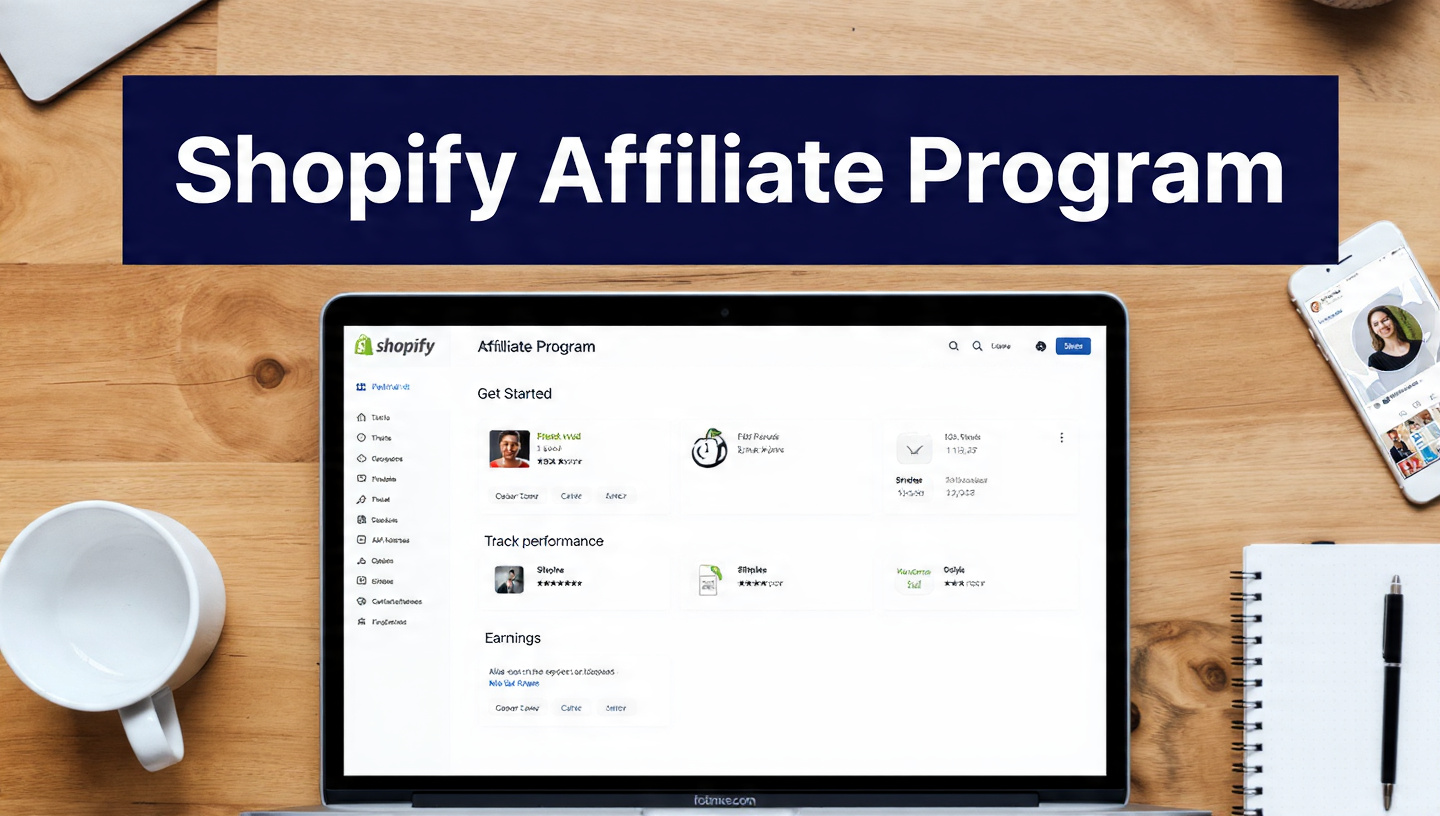
Shopify Affiliate Program

Generally, the process involves several stages.

Step 1: Build a Relevant Audience or Content Platform

Before applying, it helps to have something valuable to show.

This could be:

  • A website
  • Blog
  • YouTube channel
  • Podcast
  • Newsletter
  • Social media audience
  • Educational platform
  • Ecommerce community

Your platform doesn’t necessarily need millions of visitors.

Quality matters.

A small audience of people genuinely interested in ecommerce may be more valuable than a large audience that has no interest in online business.


Step 2: Create Useful Content

If you’re starting from zero, consider publishing several high-quality pieces of content before applying.

For example:

Beginner Articles

  • What Is Ecommerce?
  • How to Start an Online Store
  • How to Choose Products to Sell Online
  • Ecommerce Business Ideas for Beginners
  • How Online Stores Make Money

Shopify-Focused Articles

  • What Is Shopify?
  • Shopify for Beginners
  • How to Start a Shopify Store
  • Shopify Store Setup Guide
  • Shopify SEO Basics

Comparison Articles

  • Shopify vs WooCommerce
  • Shopify vs Wix
  • Shopify vs Squarespace
  • Shopify vs BigCommerce

Tutorial Content

  • How to Add Products to Shopify
  • How to Customize a Shopify Store
  • How to Create a Shopify Product Page
  • How to Improve Shopify Store Conversion Rates

This demonstrates that your platform has a genuine connection to Shopify’s target audience.


Step 3: Apply Through Shopify’s Affiliate Channel

Visit Shopify’s current affiliate page and follow the application instructions provided there.

You should provide accurate information about your:

  • Website
  • Content platform
  • Audience
  • Traffic sources
  • Business model
  • Promotional methods
  • Relevant experience

Don’t exaggerate.

If you have 2,000 monthly visitors, don’t claim 200,000.

Affiliate programs want partners who can generate legitimate customers, but credibility matters too.


Step 4: Wait for the Application Decision

Approval isn’t something you should assume is automatic.

Affiliate programs evaluate applicants based on their current requirements and policies.

If you aren’t accepted, don’t treat it as the end of your affiliate marketing journey.

You can continue building your website or audience and explore other relevant affiliate programs.

Then, when your platform becomes stronger, you can review the current Shopify requirements and determine whether reapplying makes sense.


Step 5: Access Your Affiliate Resources

Once approved, you’ll receive access to the relevant affiliate tools and resources according to the current program structure.

These may include:

  • Affiliate links
  • Tracking information
  • Reporting
  • Promotional resources
  • Program guidance

Your dashboard and program documentation should be treated as the authoritative source for your current terms.


Step 6: Generate Your Affiliate Links

Affiliate links allow Shopify to identify visitors who came through your promotional efforts.

You’ll generally want to place links where they make sense.

For example:

Ready to explore Shopify? Check the current plans and features here.

The link should be relevant to what the reader is currently learning.

Avoid turning every paragraph into an affiliate link.


Step 7: Start Publishing Conversion-Focused Content

This is where the real work begins.

Getting accepted into an affiliate program doesn’t automatically generate income.

Your affiliate business succeeds when you combine:

Traffic + Trust + Intent + Relevance + Conversion

Let’s break that down.


The Shopify Affiliate Marketing Funnel

A simple affiliate funnel might look like this:

Google/Pinterest/YouTube/Social Media

Helpful Content

Trust

Shopify Recommendation

Affiliate Click

Shopify Visit

Qualifying Action

Commission

Each stage matters.

You can have a great affiliate link, but if nobody sees your content, you earn nothing.

You can have huge traffic, but if your visitors aren’t interested in ecommerce, conversion rates may be poor.

You can have highly targeted traffic, but if your article is confusing or your recommendation feels forced, people may leave without clicking.

Affiliate marketing is therefore less about placing links everywhere and more about building a useful journey.


How Much Can You Earn With Shopify Affiliate Marketing?

This is one of the most common questions.

And it’s also one of the easiest questions to answer incorrectly.

You should not assume that a certain number of visitors automatically equals a specific amount of money.

Your income depends on factors such as:

  • Current Shopify affiliate terms
  • Commission structure
  • Qualifying actions
  • Conversion rate
  • Traffic volume
  • Traffic quality
  • Audience location
  • Content quality
  • Search intent
  • Promotional strategy
  • Click-through rate
  • Customer behavior

A simple model can help you understand the math.

Imagine you attract:

10,000 monthly visitors

Suppose:

3% click your affiliate link

That’s:

300 affiliate clicks

If:

5% of those clicks produce a qualifying action

That’s:

15 qualifying referrals

Your actual earnings would depend on the commission applicable to those referrals under Shopify’s current terms.

The important lesson is that you shouldn’t focus only on traffic.

Sometimes 1,000 highly targeted visitors can be more valuable than 20,000 visitors with little commercial intent.


What Does “Passive Income” Really Mean?

Let’s clear up one common misconception.

Affiliate income isn’t truly passive in the traditional sense.

You usually need to:

  • Research topics
  • Write articles
  • Make videos
  • Build links
  • Improve SEO
  • Update outdated information
  • Answer audience questions
  • Monitor performance
  • Test different content formats

However, affiliate content can become semi-passive.

Suppose you spend two days creating an excellent tutorial.

That article might continue attracting Google visitors six months later.

A YouTube video could continue generating views for years.

A Pinterest pin could send traffic long after publication.

An email sequence could automatically introduce new subscribers to useful resources.

That’s the magic.

You work heavily upfront and potentially receive returns later.


The Best Shopify Affiliate Content Strategy

If your goal is to build a long-term affiliate business, don’t simply publish random Shopify articles.

Build a content ecosystem.

One strong strategy is to create content around the entire customer journey.


Stage 1: Awareness

Target people who are just discovering ecommerce.

Examples:

  • What Is Ecommerce?
  • How Do Online Stores Work?
  • Is Ecommerce Worth It?
  • Online Business Ideas
  • How to Start Selling Online

These topics can attract beginners.


Stage 2: Consideration

Now target people evaluating solutions.

Examples:

  • Best Ecommerce Platforms
  • Shopify vs WooCommerce
  • Shopify vs Wix
  • Shopify Alternatives
  • Best Platforms for Small Online Stores

These visitors are closer to making a decision.


Stage 3: Purchase Intent

Target people actively considering Shopify.

Examples:

  • Shopify Pricing
  • Shopify Review
  • Shopify Features
  • Shopify Plans Explained
  • Is Shopify Worth It?
  • How to Start a Shopify Store

These topics can be particularly valuable because the visitor already has a specific product in mind.


Stage 4: Education

Once people start using ecommerce platforms, they need help.

Examples:

  • How to Optimize Shopify Product Pages
  • Shopify SEO Tips
  • Shopify Email Marketing
  • Shopify Conversion Rate Optimization
  • Shopify Store Design Tips

This creates a larger ecosystem around your original content.


50 Shopify Affiliate Article Ideas

If you’re building a blog, here are topic ideas to get you started.

  1. How to Start a Shopify Store
  2. Shopify for Beginners
  3. What Is Shopify?
  4. Shopify Review
  5. Shopify Pricing Explained
  6. Is Shopify Worth It?
  7. Shopify vs WooCommerce
  8. Shopify vs Wix
  9. Shopify vs Squarespace
  10. Shopify vs BigCommerce
  11. Best Shopify Themes
  12. Best Shopify Apps
  13. Shopify SEO Guide
  14. Shopify Marketing Guide
  15. Shopify Email Marketing Guide
  16. Shopify Product Page Optimization
  17. How to Add Products to Shopify
  18. How to Customize Shopify
  19. How to Choose a Shopify Theme
  20. How to Build a Shopify Homepage
  21. Shopify Store Ideas
  22. Best Products to Sell on Shopify
  23. Shopify Dropshipping Guide
  24. Shopify Print-on-Demand Guide
  25. Shopify Digital Products Guide
  26. Shopify for Handmade Businesses
  27. Shopify for Fashion Brands
  28. Shopify for Bloggers
  29. Shopify for Artists
  30. Shopify for Small Businesses
  31. Shopify for Beginners With No Experience
  32. Shopify Store Launch Checklist
  33. Shopify SEO Mistakes
  34. Shopify Conversion Tips
  35. Shopify Product Photography Tips
  36. Shopify Branding Guide
  37. Shopify Customer Retention Strategies
  38. Shopify Social Media Marketing
  39. Shopify Pinterest Marketing
  40. Shopify Instagram Marketing
  41. Shopify TikTok Marketing
  42. Shopify Facebook Marketing
  43. Shopify Analytics Guide
  44. Shopify Abandoned Cart Strategies
  45. Shopify Landing Page Guide
  46. Shopify Product Description Guide
  47. Shopify Store Speed Tips
  48. Shopify Mobile Optimization
  49. Shopify Beginner Mistakes
  50. How to Grow a Shopify Store

Don’t Just Write About Shopify—Solve Problems

This is one of the most important lessons in affiliate marketing.

Your audience doesn’t necessarily wake up thinking:

“I want to read an article containing affiliate links.”

They have problems.

For example:

“I don’t know how to start selling my handmade products.”

That’s a problem.

You could create an article:

How to Sell Handmade Products Online: A Beginner’s Guide

Within the article, you could explain different ecommerce options and discuss Shopify where appropriate.

Another person might think:

“I have a website but nobody is buying.”

That’s another problem.

You could write:

25 Ways to Improve Your Online Store Conversion Rate

Again, Shopify can naturally become part of the discussion.

The goal is to make the affiliate recommendation a useful solution—not the entire purpose of the article.


Use Comparison Content Carefully

Comparison articles can be powerful affiliate content.

Why?

Because readers comparing two platforms are often close to making a decision.

Consider topics like:

Shopify vs WooCommerce

Explain:

  • Ease of use
  • Customization
  • Hosting
  • Maintenance
  • Costs
  • Themes
  • Apps
  • Scalability
  • Technical requirements

Then explain which type of user might prefer each option.

Don’t automatically declare Shopify the winner in every category.

Honest comparisons build trust.


Create “Best Of” Articles

List-based content can work particularly well.

Examples:

  • Best Ecommerce Platforms for Beginners
  • Best Online Store Platforms
  • Best Ecommerce Tools for Small Businesses
  • Best Platforms for Selling Digital Products
  • Best Ecommerce Platforms for Handmade Sellers

The key is to provide genuine information.

Don’t create a “10 best platforms” article where nine products exist only to make Shopify look good.

Readers notice.


Build Topic Clusters

Instead of publishing isolated articles, connect related content.

For example, create a central guide:

Ultimate Shopify Beginner Guide

Then link to supporting articles:

  • Shopify Pricing
  • Shopify Themes
  • Shopify Apps
  • Shopify SEO
  • Shopify Product Pages
  • Shopify Marketing
  • Shopify Analytics
  • Shopify Email Marketing

This structure helps readers navigate your website and can create a stronger topical relationship between related pages.


Use Internal Links Strategically

Internal links are underrated.

Imagine a reader lands on:

How to Start a Shopify Store

You can naturally link to:

  • Shopify pricing
  • Shopify themes
  • Product descriptions
  • Shopify SEO
  • Ecommerce marketing

This encourages readers to stay longer and discover more of your content.

It also helps search engines understand how your content fits together.


Create Evergreen Content

If your goal is passive or semi-passive income, evergreen content should be a major part of your strategy.

Evergreen topics remain useful over time.

Examples:

  • How to Start an Online Store
  • How to Choose Products to Sell
  • Ecommerce Marketing Basics
  • How to Write Product Descriptions
  • How to Improve Product Photography
  • How to Build an Ecommerce Brand

News articles may generate temporary traffic.

Evergreen guides can potentially generate traffic for much longer.


But Don’t Ignore Updates

Evergreen doesn’t mean “write once and forget.”

Ecommerce changes constantly.

Shopify changes:

  • Features
  • Pricing
  • Plans
  • Interfaces
  • Policies
  • Apps
  • Integrations
  • Tools

So review important content regularly.

If your article says:

“Click this button in the Shopify dashboard”

and that button no longer exists, your content immediately becomes less useful.

Updating content can be just as important as creating new content.


Pinterest for Shopify Affiliate Marketing

Pinterest can be an interesting traffic source for ecommerce content.

If you’re targeting entrepreneurs, bloggers, creators, or small-business owners, Pinterest can potentially introduce your content to people actively looking for ideas and tutorials.

Create pins around:

  • Shopify tips
  • Ecommerce ideas
  • Online business ideas
  • Product ideas
  • Store design
  • Ecommerce marketing
  • Shopify tutorials

For example:

Pin title:

15 Shopify Store Ideas for Beginners

Link the pin to a detailed article.

Then the article can provide helpful information and relevant affiliate recommendations.


YouTube for Shopify Affiliate Marketing

YouTube deserves special attention.

Why?

Because software is easier to understand when people can watch it.

Imagine creating a video:

“How to Build a Shopify Store Step by Step”

You could demonstrate:

  1. Choosing a store concept
  2. Setting up the store
  3. Choosing a theme
  4. Adding products
  5. Creating collections
  6. Customizing navigation
  7. Creating essential pages
  8. Preparing the store for launch

At the appropriate point, you can explain where viewers can learn more about Shopify using your affiliate link.


Short-Form Video Strategy

You don’t have to create only long videos.

Short-form content can attract attention.

Examples:

Video idea 1

“3 mistakes new Shopify store owners make.”

Video idea 2

“Don’t launch your store before checking these five things.”

Video idea 3

“Three Shopify features beginners should know.”

Video idea 4

“Here’s how I’d build an online store from scratch.”

Short-form videos can feed viewers into longer tutorials, blog articles, newsletters, or your main website.


Email Marketing and Shopify Affiliates

Email can become especially powerful once you have an audience.

Imagine someone downloads:

“The Beginner’s Ecommerce Launch Checklist.”

You can then build an educational email series.

Email 1

Welcome and introduce ecommerce fundamentals.

Email 2

Explain how to choose a product.

Email 3

Discuss branding.

Email 4

Explain ecommerce platforms.

Email 5

Walk through launching an online store.

Email 6

Share useful tools and resources.

Within relevant emails, Shopify can be recommended when appropriate.

The advantage is that you aren’t dependent entirely on search engines.

You own the relationship with your subscribers.


How to Write Affiliate Content That Converts

Good affiliate content doesn’t feel like advertising.

It feels like help.

Here is a simple structure.

Start With the Problem

Tell the reader you understand what they’re trying to accomplish.

Example:

Starting an online store can feel overwhelming. There are products to choose, branding decisions to make, payment options to consider, and dozens of technical details that can quickly become confusing.

Then introduce the solution.


Explain the Options

Don’t immediately say:

“Shopify is the best.”

Instead explain what the reader should evaluate.

For example:

  • Ease of use
  • Pricing
  • Features
  • Design
  • Scalability
  • Integrations
  • Support
  • Technical complexity

Then explain how Shopify fits those requirements.


Show the Benefits

Instead of generic statements like:

“Shopify is amazing.”

Be specific.

Explain how the platform can help a particular type of user.

For example:

“For someone who wants to launch an online store without managing their own ecommerce hosting environment, Shopify can provide a more streamlined starting point.”

That’s much more useful.


Use Personal Experience Whenever Possible

Affiliate content becomes stronger when you can add genuine experience.

You could include:

  • Screenshots
  • Tutorials
  • Experiments
  • Case studies
  • Results
  • Pros and cons
  • Mistakes you made
  • Lessons learned

Readers appreciate transparency.

If you haven’t personally used a feature, don’t pretend you have.


Be Honest About Disadvantages

This is crucial.

No platform is perfect.

Your readers deserve to understand:

  • Potential costs
  • Learning curves
  • Limitations
  • App expenses
  • Transaction considerations
  • Platform dependencies
  • Differences between plans

Honesty can actually increase conversions.

Why?

Because people trust recommendations that acknowledge both sides.


Use Clear Calls to Action

Don’t bury your affiliate link.

At appropriate points, use a simple call to action.

Examples:

Explore Shopify and see whether it fits your business idea.

Or:

Ready to explore Shopify for your online store? Check the current plans and features.

Or:

If you’re ready to experiment with your own online store, you can learn more about Shopify here.

Your CTA should match the reader’s stage in the buying journey.


Don’t Overload Your Articles With Affiliate Links

More links don’t necessarily mean more money.

Too many links can make your article feel spammy.

Instead, place links where they provide genuine value.

Good locations include:

  • Introduction
  • Relevant recommendation sections
  • Comparison tables
  • Tutorials
  • Conclusion

Focus on relevance rather than quantity.


Always Disclose Affiliate Relationships

Transparency matters.

If you’re using affiliate links, clearly disclose that you may earn a commission when readers make qualifying purchases or take qualifying actions through your links.

A simple disclosure might say:

Disclosure: This article contains affiliate links. If you use one of these links and complete a qualifying action, we may earn a commission at no additional cost to you.

Place disclosures where readers can reasonably notice them.

Also make sure your affiliate practices comply with applicable advertising, consumer-protection, and platform rules.


SEO Strategy for Shopify Affiliate Websites

Search engine optimization can be one of the most powerful long-term traffic sources for affiliate websites.

But don’t approach SEO as simply inserting the word “Shopify” into every paragraph.

Focus on search intent.


Keyword Type 1: Informational

Examples:

  • What is Shopify?
  • How does Shopify work?
  • How to start an online store
  • How to sell products online

These keywords can bring new visitors.


Keyword Type 2: Commercial Investigation

Examples:

  • Shopify review
  • Shopify alternatives
  • Shopify vs WooCommerce
  • Best ecommerce platforms
  • Shopify pricing

These users are evaluating options.


Keyword Type 3: Transactional

Examples:

  • Shopify plans
  • Start Shopify store
  • Shopify free trial
  • Shopify pricing plans

These searches can indicate stronger commercial intent.


Don’t Chase Only High-Volume Keywords

This is another common beginner mistake.

A keyword with 100,000 searches isn’t automatically better than a keyword with 500 searches.

Imagine:

Keyword A: 100,000 searches, very broad

Keyword B: 500 searches, highly specific commercial intent

Keyword B may generate fewer visitors but potentially more relevant affiliate opportunities.

Think about:

Search volume × relevance × intent × conversion

rather than search volume alone.


Build Authority Around Ecommerce

If your website covers everything from cooking recipes to celebrity gossip to Shopify tutorials, it may be difficult to establish a clear topical identity.

A focused website can be easier to position.

For example:

Ecommerce-focused site

Categories:

  • Shopify
  • Ecommerce
  • Online business
  • Digital marketing
  • Product research
  • Store optimization

That creates a logical ecosystem.


Create a Shopify Affiliate Content Calendar

Consistency is important.

You could use a schedule like:

Monday

Publish one educational article.

Tuesday

Create a Pinterest graphic.

Wednesday

Publish a short-form video.

Thursday

Update an older article.

Friday

Publish a comparison article.

Saturday

Create an email newsletter.

Sunday

Review analytics.

You don’t need to follow this exact schedule.

The point is to create a repeatable system.


A 90-Day Shopify Affiliate Strategy

If you’re starting from scratch, here’s a simple framework.

Days 1–30: Foundation

Focus on:

  • Website setup
  • Niche positioning
  • Audience research
  • Keyword research
  • Initial content
  • Affiliate program research
  • Analytics setup

Publish approximately 10–15 genuinely useful articles if you can maintain quality.


Days 31–60: Expansion

Create:

  • Comparison articles
  • Tutorials
  • Beginner guides
  • Product-focused content
  • Pinterest content
  • YouTube videos
  • Internal links

Start identifying which topics attract the most interest.


Days 61–90: Optimization

Now look at:

  • Traffic
  • Click-through rates
  • Search rankings
  • Popular articles
  • Affiliate clicks
  • Conversion performance

Improve the pages that already show potential.

You don’t always need more content.

Sometimes you need better content.


Track the Right Metrics

Affiliate marketers often obsess over revenue.

Revenue matters, but it’s not the only metric.

Track:

Visitors

How many people are reaching your content?

Affiliate Clicks

How many people click your links?

Click-Through Rate

What percentage of visitors click?

Conversions

How many referred visitors produce qualifying actions?

Earnings Per Visitor

How much revenue does your traffic generate?

Top Content

Which articles produce the most affiliate activity?

These numbers help you identify where your funnel is leaking.


Example of Affiliate Optimization

Suppose you publish an article that gets:

20,000 monthly visitors

But only:

100 affiliate clicks

Your click-through rate is very low.

The problem may not be traffic.

The problem may be the article’s CTA, placement, relevance, or audience intent.

Now imagine another article gets:

2,000 visitors

but produces:

150 affiliate clicks.

That article may be much more commercially valuable.

This is why smart affiliate marketers optimize for quality of traffic, not just quantity.


Common Shopify Affiliate Marketing Mistakes

Let’s look at some mistakes that can quietly destroy an affiliate website.

Mistake 1: Expecting Immediate Passive Income

Affiliate marketing usually takes time.

You may publish dozens of articles before seeing meaningful results.

Don’t confuse publishing with building a business.


Mistake 2: Writing Thin Content

A 500-word article repeating information found everywhere else isn’t likely to build much authority.

Go deeper.

Add:

  • Examples
  • Screenshots
  • Explanations
  • Pros and cons
  • Practical steps
  • Original insights
  • FAQs

Mistake 3: Stuffing Affiliate Links Everywhere

This makes your content feel promotional.

Use links naturally.


Mistake 4: Ignoring Search Intent

If someone searches:

“What is Shopify?”

and you give them a 2,000-word pricing sales pitch, you’ve missed their intent.

Answer the actual question.


Mistake 5: Promoting Shopify to Everyone

Shopify isn’t necessarily right for every person.

A beginner may need something different.

A technically advanced developer may want a different platform.

Your job isn’t to convince everyone.

Your job is to help the right person make an informed decision.


Mistake 6: Copying Other Affiliate Sites

Copying competitors rarely creates a strong business.

Instead, ask:

“What can I explain better?”

Maybe you can create better screenshots.

Maybe your tutorials are easier to follow.

Maybe your comparison is more balanced.

Maybe you can provide real examples.

That’s your competitive advantage.


Mistake 7: Ignoring Mobile Readers

A large percentage of web traffic comes from mobile devices.

Make sure your content:

  • Loads quickly
  • Has readable text
  • Uses short paragraphs
  • Uses clear headings
  • Doesn’t overwhelm readers
  • Has easy-to-use links

How to Build Trust With Your Audience

Affiliate marketing is fundamentally a trust business.

Think about it.

A reader is asking:

“Should I trust this recommendation?”

Your content should answer that question.

You build trust by:

  • Being honest
  • Explaining both pros and cons
  • Disclosing affiliate relationships
  • Providing useful information
  • Avoiding exaggerated income claims
  • Updating old content
  • Admitting what you don’t know
  • Using real examples
  • Helping people even when they don’t buy

Ironically, the less desperate you are to make a commission, the more trustworthy your content often becomes.


Don’t Promise Readers They’ll Get Rich

Avoid headlines like:

“Make $10,000 Every Month With Shopify Affiliate Marketing!”

Unless you have extremely strong evidence for a specific claim, this type of headline can create unrealistic expectations.

A better approach is:

How to Build a Shopify Affiliate Marketing Business From Scratch

That’s educational and sustainable.

Affiliate marketing is a business model, not a lottery ticket.


How to Make Your Affiliate Business More Passive

If your ultimate goal is passive income, build systems.

System 1: Evergreen Content

Create articles that remain useful.

System 2: Search Traffic

Build pages that can attract visitors without paid advertising.

System 3: Email Automation

Create useful automated sequences.

System 4: Content Repurposing

Turn one article into:

  • Pinterest pins
  • YouTube Shorts
  • Instagram posts
  • LinkedIn posts
  • Newsletter content
  • Video scripts

System 5: Content Updates

Create a regular schedule for refreshing successful pages.

The goal is to create an ecosystem that continues working even when you’re not actively publishing every day.


Content Repurposing Example

Suppose you write:

How to Start a Shopify Store

That one article could become:

YouTube Video

“How to Start a Shopify Store Step by Step”

Pinterest Pin

“Shopify Store Launch Checklist”

Instagram Carousel

“10 Steps to Start Your Online Store”

Short Video

“3 Shopify Mistakes Beginners Make”

Newsletter

“Your First Shopify Store: What to Do Before Launch”

Downloadable Checklist

“Shopify Store Launch Checklist”

One idea can become an entire content campaign.

That’s how you make your workload more efficient.


Shopify Affiliate Marketing Without a Blog

You don’t necessarily need a traditional website.

You can build an audience through:

  • YouTube
  • TikTok
  • Instagram
  • Pinterest
  • LinkedIn
  • Podcasting
  • Email newsletters
  • Online communities

However, owning a website can provide additional benefits because you control the publishing environment and can build an SEO asset over time.

A website also gives you a central destination for your content.


Should You Buy Paid Ads?

Beginners often wonder whether they should run Facebook, Google, or other paid advertising directly to affiliate links.

Be careful.

Paid traffic can become expensive very quickly.

You need to understand:

Ad cost → click cost → affiliate click → conversion → commission

If you pay $1 for a visitor but your average affiliate revenue per visitor is $0.20, your campaign loses money.

Organic traffic can take longer, but it can potentially become much more profitable over time.

Before spending heavily on paid advertising, understand the economics.


How to Choose a Shopify Affiliate Niche

You don’t have to target “everyone interested in Shopify.”

Choose a specific audience.

For example:

Shopify for Handmade Sellers

Content about:

  • Handmade products
  • Jewelry
  • Crafts
  • Product photography
  • Branding
  • Packaging
  • Ecommerce

Shopify for Fashion Entrepreneurs

Content about:

  • Clothing
  • Accessories
  • Fashion branding
  • Product photography
  • Online stores

Shopify for Digital Creators

Content about:

  • Digital products
  • Templates
  • Courses
  • Downloads
  • Creator businesses

Shopify for Beginners

Content about:

  • Ecommerce basics
  • Store setup
  • Marketing
  • Product selection
  • Beginner mistakes

A niche can make content creation easier because you know exactly who you’re talking to.


Build Around Audience Problems, Not Affiliate Programs

This principle is worth remembering:

Don’t build a website because you found an affiliate program. Build a website because you can solve a specific audience’s problems.

Then affiliate programs become monetization tools.

For example:

You build a website helping handmade sellers grow.

Your content covers:

  • Pricing handmade products
  • Product photography
  • Packaging
  • Branding
  • Social media
  • Ecommerce
  • Email marketing
  • Online stores

Shopify becomes one relevant recommendation within that ecosystem.

That’s a much stronger business model than building hundreds of pages designed solely around affiliate links.


How Long Does It Take to Make Money?

There is no universal timeline.

Some creators generate affiliate revenue quickly.

Others take many months.

It depends on:

  • Existing audience
  • Content quality
  • Competition
  • Traffic source
  • Niche
  • Publishing frequency
  • SEO skill
  • Conversion rate
  • Promotional ability

A more useful question is:

“What system can I build over the next 6–12 months?”

That’s something you can control.


What If You Have No Audience?

Start small.

You don’t need 100,000 followers.

You need your first:

  • 10 readers
  • 100 readers
  • 1,000 readers

Then improve.

Your first goal shouldn’t necessarily be income.

It can be learning.

Learn:

  • What people search for
  • What content they click
  • What questions they ask
  • What headlines work
  • What articles generate clicks
  • What content produces conversions

Once you understand your audience, scaling becomes easier.


A Simple Shopify Affiliate Website Structure

Here’s an example structure:

Homepage

Start an Online Store

Shopify

  • Shopify Review
  • Shopify Pricing
  • Shopify Beginner Guide
  • Shopify vs WooCommerce
  • Shopify Themes
  • Shopify Apps

Ecommerce

  • Product Ideas
  • Marketing
  • SEO
  • Email Marketing
  • Branding
  • Conversion Optimization

Resources

  • Tools
  • Guides
  • Checklists
  • Templates

This creates a logical website structure.


25 More Content Ideas With Strong Commercial Intent

If you want to focus specifically on readers who are closer to making purchasing decisions, consider:

  1. Is Shopify Worth It for Beginners?
  2. Shopify Pricing: What Will You Actually Pay?
  3. Shopify vs WooCommerce for Small Businesses
  4. Shopify vs Wix for Ecommerce
  5. Shopify Review for New Store Owners
  6. Best Shopify Plan for Beginners
  7. Best Shopify Themes for Small Businesses
  8. Best Shopify Apps for New Stores
  9. Shopify Alternatives for Beginners
  10. Shopify for Digital Products
  11. Shopify for Handmade Products
  12. Shopify for Clothing Brands
  13. Shopify for Dropshipping
  14. Shopify for Print-on-Demand
  15. Shopify for Bloggers
  16. Shopify for Artists
  17. Shopify Store Setup Guide
  18. Shopify Store Launch Checklist
  19. Shopify SEO Tools
  20. Shopify Marketing Tools
  21. Shopify Email Marketing Tools
  22. Shopify Conversion Optimization
  23. Shopify Product Page Examples
  24. Shopify Store Design Guide
  25. Shopify Beginner Mistakes

How to Create a High-Converting Shopify Review

A good review should not simply say:

“Shopify is great.”

Use a structured approach.

Introduction

Explain who Shopify is for.

What Is Shopify?

Give beginners context.

Main Features

Explain important capabilities.

Ease of Use

Discuss the learning curve.

Pricing

Explain current pricing carefully and link readers to official information because pricing can change.

Pros

Explain strengths.

Cons

Explain weaknesses.

Who Should Use Shopify?

Give specific examples.

Who Might Want an Alternative?

Be honest.

Final Verdict

Summarize your findings.

Then provide a relevant CTA.


Use Tables to Make Comparisons Easier

Comparison content can be easier to understand when you organize information visually.

For example:

FeatureShopifyAlternative Platform
Ease of setupHighVaries
HostingIncludedVaries
ThemesExtensive ecosystemVaries
AppsLarge ecosystemVaries
CustomizationStrongVaries
Technical requirementsGenerally beginner-friendlyVaries

Don’t create tables merely for SEO.

Use them because they make decisions easier for readers.


Create Free Resources

One of the best ways to build an audience is to give something genuinely useful away.

Examples:

Ecommerce Launch Checklist

A downloadable checklist covering:

  • Business idea
  • Product selection
  • Branding
  • Store setup
  • Payments
  • Shipping
  • Marketing
  • Launch

Product Description Template

Help sellers write better product pages.

Ecommerce Content Calendar

Give new store owners ideas for social media content.

Shopify Store Audit Checklist

Help people identify common store problems.

These resources can help you build an email list.


Build an Email List Early

Don’t wait until you have 100,000 visitors.

Start building an email list as soon as you have a meaningful reason for someone to subscribe.

Your lead magnet should solve a real problem.

For example:

Free 50-Point Ecommerce Store Launch Checklist

Then create an automated welcome series.

Over time, your email list can become one of your most valuable business assets.


Create Content for Different Buyer Personas

Not every Shopify visitor is the same.

Consider:

The Beginner

Needs:

  • Simple explanations
  • Step-by-step instructions
  • Low technical complexity

The Existing Business Owner

Needs:

  • Growth strategies
  • Optimization
  • Integrations
  • Automation

The Creator

Needs:

  • Digital products
  • Branding
  • Audience monetization

The Handmade Seller

Needs:

  • Product presentation
  • Ecommerce basics
  • Inventory
  • Branding
  • Marketing

Create separate content for each audience.


How to Stand Out From Thousands of Affiliate Websites

The affiliate marketing space is competitive.

So ask yourself:

What makes my content better?

Possible answers include:

  • Original research
  • Real experiments
  • Better screenshots
  • Better tutorials
  • Personal experience
  • Clearer explanations
  • Better design
  • Stronger case studies
  • More comprehensive guides
  • Faster updates
  • Better comparisons

Don’t try to win by publishing the most articles.

Try to publish the most useful articles.


Build a Brand, Not Just an Affiliate Site

This is perhaps the biggest long-term lesson.

An affiliate site says:

“Click this link.”

A brand says:

“Come back because we consistently help you.”

The second is much more valuable.

Build:

  • A recognizable name
  • Consistent design
  • Helpful content
  • Email subscribers
  • Social profiles
  • A community
  • Original resources

Affiliate commissions can then become one part of a broader online business.


Other Ways to Monetize a Shopify Audience

Once you’ve built an audience, you don’t have to rely exclusively on affiliate commissions.

You could potentially add:

  • Display advertising
  • Digital products
  • Ecommerce templates
  • Courses
  • Consulting
  • Sponsored content
  • Newsletter sponsorships
  • Other relevant affiliate programs
  • Software recommendations
  • Educational memberships

This diversification can make your business more resilient.


A Simple Revenue Ladder

You might eventually build a model like:

Free content

Email subscriber

Affiliate recommendation

Digital product

Course

Consulting or premium service

This turns traffic into a larger business ecosystem.


Frequently Asked Questions

Is the Shopify Affiliate Program free to join?

Affiliate programs generally don’t require you to purchase a product simply to become an affiliate, but eligibility and program requirements can change. Check Shopify’s current official affiliate information before applying.


Do I need to own a Shopify store?

Not necessarily. The purpose of the affiliate program is to promote Shopify to potential customers, so affiliates can operate as publishers, educators, creators, or other types of partners rather than necessarily being Shopify store owners themselves. Always review current eligibility requirements.


Can bloggers join the Shopify Affiliate Program?

Bloggers can be a natural fit because ecommerce and Shopify-related topics work well with educational articles, tutorials, comparisons, and reviews. Approval depends on the program’s current requirements.


Can YouTubers promote Shopify?

YouTube can be a strong channel for Shopify-related educational content. Tutorials, reviews, ecommerce lessons, and store-building videos can all be relevant.


Can beginners make money with Shopify affiliate marketing?

Yes, beginners can build affiliate businesses, but there’s no guarantee of income.

The biggest advantage beginners have is time to learn.

Start with useful content rather than focusing exclusively on commissions.


Is Shopify affiliate income really passive?

It can become semi-passive, but it isn’t completely hands-off.

You may need to:

  • Update content
  • Maintain your website
  • Improve rankings
  • Monitor conversions
  • Update outdated information
  • Continue building your audience

Think of it as front-loaded work that can continue producing results.


How much traffic do I need?

There is no magic number.

A small audience with strong buying intent can sometimes be more valuable than a large audience with no commercial interest.

Focus on relevance and intent.


Should I use SEO or social media?

Ideally, both.

SEO can provide long-term search traffic.

Social media can help you build awareness and distribute content quickly.

Email can give you another direct channel.

A diversified traffic strategy is often more resilient than relying on one source.


Final Shopify Affiliate Marketing Checklist

Before you start, make sure you have a clear plan.

  • Choose a specific ecommerce audience.
  • Build a website, YouTube channel, newsletter, or other content platform.
  • Publish genuinely useful content.
  • Research Shopify’s current affiliate requirements.
  • Apply through Shopify’s official affiliate channel.
  • Create relevant affiliate content.
  • Add affiliate disclosures.
  • Use affiliate links naturally.
  • Build comparison and tutorial content.
  • Develop evergreen resources.
  • Learn basic SEO.
  • Build an email list.
  • Repurpose content across multiple platforms.
  • Track affiliate clicks and conversions.
  • Update successful content.
  • Don’t rely on unrealistic income promises.
  • Diversify your traffic sources.
  • Continue improving your content.

Final Thoughts: Is the Shopify Affiliate Program Worth Exploring?

The Shopify Affiliate Program can be an appealing opportunity for people who already create content around ecommerce, entrepreneurship, online business, marketing, or related topics.

But the affiliate link itself isn’t the business.

Your audience is the business.

Your content is the asset.

Your trust is the competitive advantage.

And your ability to consistently solve problems is what can turn occasional affiliate clicks into a sustainable income stream.

If you’re starting from scratch, don’t worry about trying to become a huge affiliate marketer overnight.

Start with one useful article.

Then another.

Create a tutorial.

Answer a question.

Build an email list.

Make a helpful video.

Improve an old article.

Study what your readers need.

Over time, these small actions can compound.

The most successful affiliate websites often aren’t built around aggressive selling. They’re built around helping people make better decisions.

That is exactly the mindset you want to bring to Shopify affiliate marketing.

Instead of asking:

“How can I get someone to click my affiliate link?”

Ask:

“How can I help someone who wants to build an online business?”

That small change in perspective can transform the way you create content.

And if you consistently provide useful answers, build genuine trust, and create a system for attracting the right audience, your Shopify affiliate business has the potential to become much more than a collection of affiliate links—it can become a valuable long-term digital asset.

Leave a Reply

Your email address will not be published. Required fields are marked *