
Imagine waking up to find that money has landed in your bank account while you were sleeping.
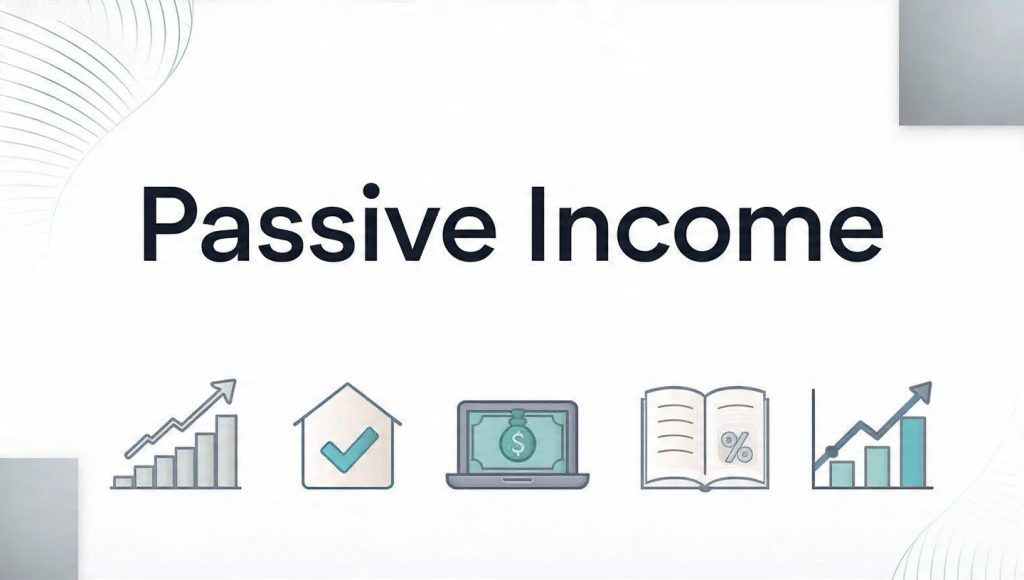
No, it’s not a dream. It’s the promise of passive income—earning money with minimal ongoing effort after an initial investment of time, money, or both.
For beginners, the term “passive income” often conjures images of wealthy investors collecting rent checks or coding an app that goes viral. But the reality is more accessible. Passive income exists on a spectrum, and there are entry points for every budget and skill level.
This guide covers 7 realistic passive income strategies for beginners in 2026. These aren’t “get rich quick” schemes—they’re proven methods that require upfront work but can generate income for months or years afterward.

What Is Passive Income, Really?
Let’s clear up a common misconception: passive income isn’t “no work” income .
True passive income requires effort upfront—sometimes significant effort—to create an asset that can generate money with minimal maintenance over time.
Think of it like planting a tree:
- Year 1: You dig, plant, water, and protect the sapling (lots of work)
- Year 5: The tree provides shade and fruit with minimal effort
- Year 10: It’s a mature asset that keeps giving
Passive income streams follow the same pattern. The work comes first; the passive earnings come later.
Active vs. Passive Income
| Active Income | Passive Income |
|---|---|
| Trading time for money | Money works for you |
| You stop, income stops | Income can continue |
| Examples: freelancing, hourly work | Examples: royalties, dividends, digital products |
For beginners, the goal isn’t to replace your job overnight. It’s to start building small assets that can grow over time.
Before You Start: The Beginner’s Mindset
Start Small, Think Long-Term
Don’t quit your day job to pursue passive income. Start as a side project, learn the ropes, and scale what works.
Reinvest Early Returns
When you make your first $50, reinvest it in better tools or training. Small reinvestments compound over time.
Patience Is Non-Negotiable
Passive income takes time. The “overnight success” stories usually took years of work before they went viral.
Focus on One Stream First
Beginners often try three things at once and master none. Pick one strategy, commit for 6-12 months, then expand.

Strategy 1: Create and Sell Digital Products
Digital products are the ultimate beginner-friendly passive income stream. You create them once, and they can sell forever .
Why it’s great for beginners:
- Zero inventory or shipping costs
- Can be created with free tools (Canva, Google Docs)
- Sells automatically via platforms like Etsy or Gumroad
Best Digital Products for Beginners
| Product Type | Example | Tools Needed |
|---|---|---|
| Printable planners | Budget tracker, meal planner | Canva |
| Templates | Resume, social media graphics | Canva |
| E-books | Short guide on a topic you know | Google Docs, Canva |
| Checklists | Packing list, to-do lists | Canva, Google Docs |
| Workout plans | 4-week beginner fitness plan | Google Docs |
How to Get Started
- Choose a niche you know something about (budgeting, fitness, parenting, recipes)
- Create one simple product that solves a specific problem
- Set up a shop on Etsy or Gumroad (both beginner-friendly)
- Create eye-catching images in Canva to showcase your product
- Price it between $5-$20 for your first product
Realistic timeline: Create your product in a weekend. First sales could happen within days or weeks. Over time, products can generate income for years.
Strategy 2: Write and Publish Kindle eBooks
Amazon’s Kindle Direct Publishing (KDP) lets anyone publish eBooks and earn royalties. It’s like having a book in the world’s largest bookstore .
Why it’s great for beginners:
- No upfront costs
- Amazon handles delivery and customer service
- Royalties of 35-70% per sale
What to Write About
You don’t need to write a 300-page novel. Short, helpful books (50-100 pages) perform well.
Profitable beginner niches:
- How-to guides (cooking, gardening, DIY)
- Short story collections
- Children’s books (with illustrations)
- Diet and fitness plans
- Business and career advice
How to Get Started
- Brainstorm topics you know well enough to teach
- Write a short outline (5-10 chapters)
- Write 5,000-10,000 words (about 50-100 pages)
- Design a cover using Canva templates
- Publish on KDP (follow their formatting guidelines)
- Promote on your blog, social media, or Pinterest
Realistic timeline: First book might take 2-4 weeks to write. Sales can start immediately but often build over months. Multiple books create compounding income.

Strategy 3: Start a Niche Blog (Yes, It Still Works)
Blogging remains one of the most accessible passive income paths. You write helpful content, attract readers, and monetize through ads, affiliate links, or your own products .
Why it’s great for beginners:
- Low startup cost ($3-10/month for hosting)
- You learn valuable skills (SEO, content creation)
- Content works for you 24/7
Choosing a Niche
The best niches balance your interest with audience demand.
Beginner-friendly niches:
- Personal finance for beginners
- Healthy recipes on a budget
- Houseplant care
- Minimalism and decluttering
- Beginner fitness
- Side hustles and making money
How to Get Started
- Choose a domain name and get hosting (Bluehost, SiteGround, or Hostinger)
- Install WordPress (one-click with most hosts)
- Pick a simple theme like Astra or Kadence
- Write 5-10 helpful posts before launching
- Apply to ad networks like Mediavine or AdThrive once you have traffic
- Add affiliate links to products you recommend
Realistic timeline: 6-12 months to see meaningful traffic. First $100/month often takes 6-9 months. Successful blogs can generate $1,000-$5,000+/month after 1-2 years.
Strategy 4: Sell Stock Photos and Videos
If you have a decent smartphone or camera, you can sell photos and videos online. Each photo can earn money multiple times over years .
Why it’s great for beginners:
- No specialized skills needed (good composition helps)
- Smartphone photos are accepted
- Passive income from content you already create
What Sells Best
- Business and lifestyle (people working, coffee shops, city scenes)
- Nature and landscapes (mountains, beaches, forests)
- Food photography (meals, ingredients, cooking)
- Technology (laptops, phones, home office setups)
- Travel (landmarks, cultures, transportation)
How to Get Started
- Take high-quality photos with good lighting and composition
- Edit them (Lightroom mobile is free and powerful)
- Upload to stock sites like Shutterstock, Adobe Stock, or iStock
- Write keyword-rich descriptions (research what buyers search for)
- Upload consistently to build your portfolio
Realistic timeline: Photos can start selling within weeks. A single good photo might earn $1-5 per download. With 100+ photos, you can build steady monthly income.

Strategy 5: Invest in High-Yield Savings or CDs
This is the truest form of passive income—literally earning money while you do nothing. Returns are modest but guaranteed (within FDIC limits) .
Why it’s great for beginners:
- Zero work required after setup
- No risk of losing principal
- Better than letting money sit in checking
How It Works
High-yield savings accounts (HYSAs) and Certificates of Deposit (CDs) pay interest on your deposits. In 2026, rates range from 4-5% APY at competitive online banks.
How to Get Started
- Research online banks offering competitive rates (Ally, Marcus, SoFi, CIT Bank)
- Open an account (takes minutes online)
- Transfer money from your checking account
- Watch it grow—interest compounds monthly
Realistic earnings: On $1,000 at 4.5% APY, you earn about $45 per year—not life-changing, but entirely passive and risk-free.
Strategy 6: Create an Online Course
If you have expertise in something others want to learn, packaging it into a course creates a scalable asset that can generate income for years .
Why it’s great for beginners:
- One course can generate thousands in revenue
- Platforms handle hosting and payments
- You can start with just a smartphone and screen recording
Course Topic Ideas
- Hobbies (photography basics, playing guitar, knitting)
- Professional skills (Excel tips, public speaking, project management)
- Personal development (meditation, time management, goal setting)
- Creative skills (watercolor painting, digital art, writing)
- Fitness and wellness (yoga for beginners, meal prep, home workouts)
How to Get Started
- Outline your course into 5-10 modules with clear learning objectives
- Record videos using your phone or screen recording software
- Upload to a platform like Teachable, Thinkific, or Udemy
- Price your course ($50-$500 depending on depth)
- Promote on your blog, social media, or YouTube
Realistic timeline: Creating a course takes 1-3 months. Sales can start immediately with promotion. A good course can generate $500-$5,000+ per year with minimal updates.

Strategy 7: Affiliate Marketing
Affiliate marketing means earning commissions by promoting other people’s products. You share a link; someone buys; you get paid .
Why it’s great for beginners:
- No product creation needed
- Can start with zero money
- Scales with your content
How It Works
- Join affiliate programs (Amazon Associates, ShareASale, individual brands)
- Get unique affiliate links
- Share those links in your content (blog posts, social media, YouTube)
- Earn commissions when people buy
Beginner-Friendly Affiliate Programs
| Program | Commission | Best For |
|---|---|---|
| Amazon Associates | 1-10% | Almost any niche |
| ShareASale | Varies by merchant | Diverse products |
| CJ Affiliate | Varies | Larger brands |
| Individual brands | Varies | Specific niches |
How to Get Started
- Create content that naturally recommends products (reviews, roundups, tutorials)
- Add affiliate links where they genuinely help readers
- Disclose your affiliate relationship (required by FTC)
- Promote your content to get eyes on your recommendations
Realistic timeline: Affiliate income grows with your audience. First commissions could come within weeks, but significant income takes months of consistent content creation.
Passive Income Comparison for Beginners
| Strategy | Upfront Work | Time to First Income | Passive Potential | Best For |
|---|---|---|---|---|
| Digital Products | Hours to days | Days to weeks | High | Creators, organizers |
| Kindle eBooks | Weeks | Weeks to months | Medium | Writers, experts |
| Blogging | Months | 6-12 months | Very High | Patient creators |
| Stock Photos | Hours | Weeks to months | Medium | Photographers |
| High-Yield Savings | Minutes | Immediate | Low | Anyone with savings |
| Online Course | 1-3 months | Months | Very High | Experts, teachers |
| Affiliate Marketing | Ongoing | Months | High | Content creators |
Common Beginner Mistakes to Avoid
1. Quitting Too Early
Most passive income streams take 6-12 months to gain traction. Beginners often quit right before things start working.
2. Chasing “Get Rich Quick” Schemes
If it promises overnight wealth with zero work, it’s a scam. Legitimate passive income requires upfront effort.
3. Trying Everything at Once
Pick one strategy and master it. Spreading yourself thin leads to nothing working well.
4. Ignoring Tax Implications
Passive income is still taxable income. Keep records and consult a tax professional.
5. Not Reinvesting
Use early earnings to improve your tools, skills, or marketing. Small reinvestments compound over time.
Your 90-Day Beginner Action Plan
Month 1: Choose and Learn
- Pick ONE strategy from this list
- Research successful examples in your chosen area
- Set up necessary accounts (hosting, Etsy, Amazon KDP)
- Create a simple plan with milestones
Month 2: Create and Launch
- Dedicate focused time to create your asset
- Get feedback from friends or online communities
- Launch (publish your first product, post your first 5 blog articles)
- Document what you learn
Month 3: Promote and Iterate
- Share your work on social media and relevant communities
- Analyze what’s working and what isn’t
- Make improvements based on feedback
- Plan your next creation based on learnings
Frequently Asked Questions
How much money do I need to start passive income?
Zero to very little. Digital products, blogging, and affiliate marketing can start with just your time. High-yield savings requires money to deposit, but you can start with any amount.
How long until I see real income?
Most beginners earn their first $100 within 3-9 months. Significant income ($1,000+/month) typically takes 1-2 years of consistent effort.
Can I do passive income while working full-time?
Yes—and most people do. Passive income works best as a side project that grows over time. Your full-time job funds your life while your side project grows.
Do I need technical skills?
No. Platforms have become incredibly user-friendly. Canva, WordPress, and course platforms are designed for non-technical users. You’ll learn as you go.
Is passive income really passive?
Not at first. The “passive” comes after months of upfront work. Even established streams need occasional maintenance. Think of it as “asynchronous income” rather than completely hands-off.
What’s the best strategy for a complete beginner?
If you have savings: High-yield savings account (instant, zero work)
If you have creative skills: Digital products on Etsy
If you have writing skills: Kindle eBooks or blogging
If you have expertise: Online course
If you have a camera: Stock photos
Start Your Passive Income Journey Today
Passive income isn’t about getting something for nothing. It’s about doing the work once and letting that work continue to pay you over time.
The seven strategies in this guide are proven, accessible, and beginner-friendly. They won’t make you rich overnight. But with consistency and patience, they can build into meaningful income streams that give you more freedom, security, and options.
The best time to start was years ago. The second best time is today.
Pick one strategy, take the first step, and begin building your passive income future.
 Previous Post
 Next Post