

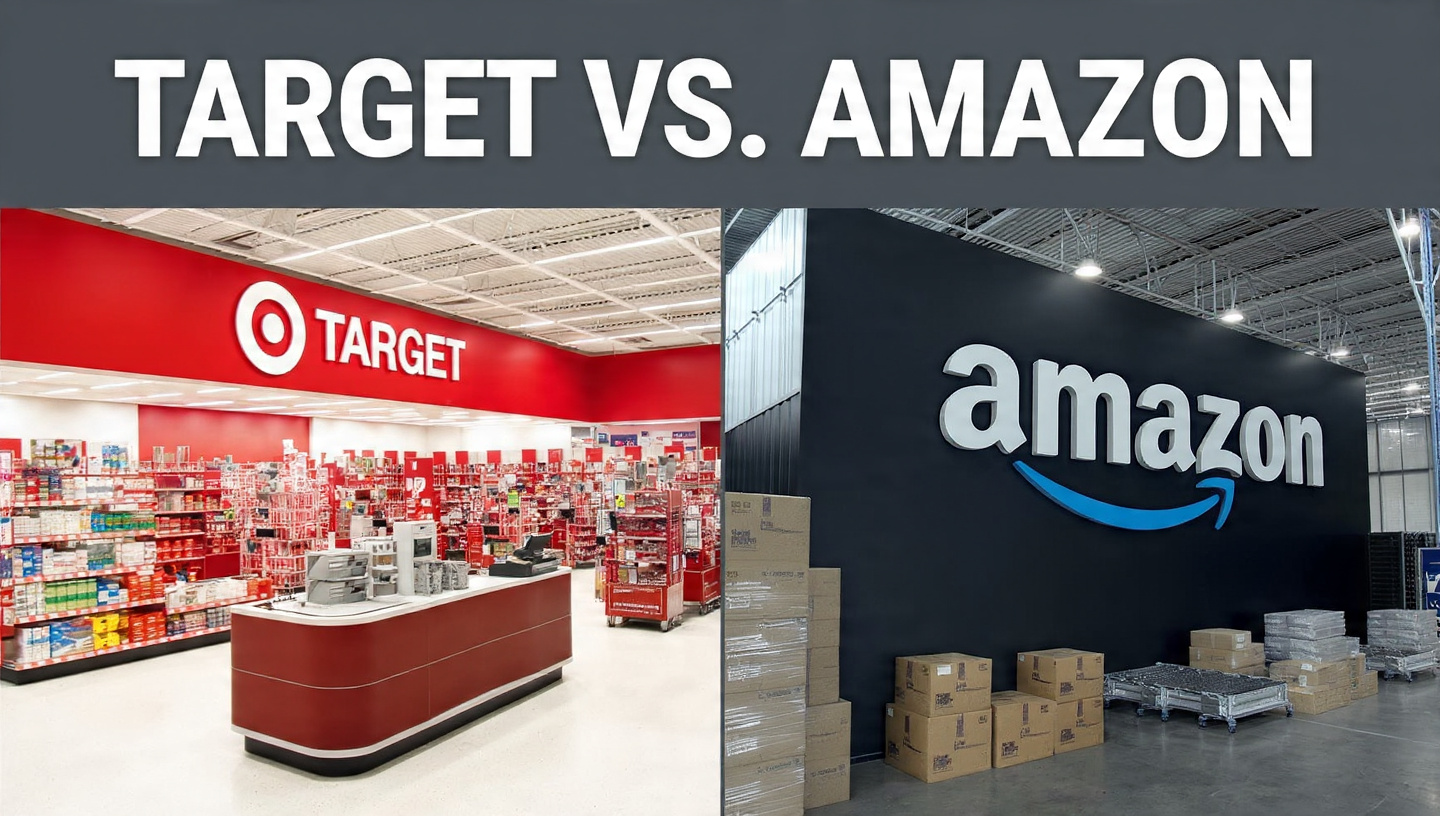
Affiliate marketing can feel a little like choosing between two very familiar roads.
On one side, you have Target, a trusted retail brand with a strong reputation for home goods, beauty products, electronics, clothing, groceries, furniture, and everyday essentials. On the other, there is Amazon, the enormous online marketplace where shoppers can find almost anything they need.
For bloggers, content creators, review websites, Pinterest publishers, niche site owners, and social media marketers, both can look incredibly attractive.
But there is an important question hiding underneath all the excitement:
Which one actually converts better?
That is a much more interesting question than simply asking which affiliate program pays the higher commission.
A program can offer an appealing commission rate but perform poorly if visitors do not click. Another program may have a lower commission rate but generate more sales because shoppers already trust the retailer, recognize the products, and feel comfortable completing their purchases.
And that is exactly why comparing the Target Affiliate Program vs. Amazon Associates requires looking at the entire customer journey—not just the commission percentage.
In this guide, we will take a detailed look at both options, compare their strengths and weaknesses, explore which types of content work best for each, examine conversion factors, discuss cookies and commissions, and build practical strategies for deciding when Target may outperform Amazon and when Amazon remains the stronger choice.
The goal is simple: help you choose the affiliate partner that makes the most sense for your audience, your content, and your business model.
Target Affiliate Program vs. Amazon at a Glance
Before getting into the details, here is the big-picture comparison.
| Factor | Target Affiliate Program | Amazon Associates |
|---|---|---|
| Brand recognition | Very strong | Extremely strong |
| Product variety | Broad | Massive |
| General consumer appeal | Excellent | Excellent |
| Home & lifestyle products | Excellent | Excellent |
| Beauty products | Strong | Strong |
| Fashion | Strong | Strong |
| Electronics | Good | Excellent |
| Product depth | Moderate to high | Exceptional |
| Shopper trust | Very high | Very high |
| Product comparison potential | Good | Excellent |
| Long-tail product availability | More limited | Exceptional |
| Best for | Lifestyle, home, fashion, beauty, retail content | Broad product content and product-focused websites |
| Conversion potential | Strong in relevant niches | Strong across many niches |
| Ease of finding alternatives | Good | Excellent |
| One-stop shopping | Strong | Exceptional |
| Ideal content model | Curated recommendations and lifestyle content | Reviews, comparisons, buying guides, roundups |
The most important takeaway is this:
There is no universal winner.
Amazon tends to have an advantage when your content depends on massive product selection and highly specific product searches.
Target can be extremely competitive when your audience is already interested in mainstream retail categories such as home décor, furniture, beauty, fashion, kitchen products, seasonal merchandise, and everyday household purchases.
What Is Affiliate Marketing?
Before comparing the two programs, it helps to understand the basic affiliate model.
Affiliate marketing allows you to earn a commission by referring shoppers to a retailer.
Imagine that you run a home décor blog.
You publish an article called:
“15 Cozy Living Room Ideas for a Small Apartment.”
Within that article, you recommend products such as:
- Throw pillows
- Area rugs
- Lamps
- Curtains
- Coffee tables
- Storage baskets
- Wall décor
- Blankets
- Side tables
You add affiliate links to relevant products.
A reader clicks one of your links and purchases an eligible item.
You earn a commission according to the affiliate program’s applicable terms.
That sounds simple, but successful affiliate marketing is really about something much bigger:
matching the right product with the right reader at the right moment.
This is where Target and Amazon can behave very differently.
Why Conversion Rate Matters More Than Commission Rate
One of the biggest mistakes new affiliate marketers make is focusing almost entirely on commission percentages.
Suppose Program A pays 5% and Program B pays 3%.
At first glance, Program A appears better.
But imagine this:
- Program A receives 1,000 clicks
- 3% of visitors purchase
- Average order value is $50
- Commission is 5%
That produces approximately:
1,000 × 3% × $50 × 5% = $75
Now consider Program B:
- 1,000 clicks
- 6% conversion rate
- $60 average order
- 3% commission
That produces:
1,000 × 6% × $60 × 3% = $108
The lower commission program generates more revenue.
This is why you should think about earnings per click, conversion rate, average order value, product relevance, and customer intent rather than commission percentage alone.
And there is another important consideration:
Affiliate program terms can change.
Commission structures, eligible categories, attribution rules, promotional terms, and program availability can be updated over time. Always verify the current terms through the relevant affiliate platform before publishing specific rates in your content.
Understanding the Target Affiliate Program
Target is one of the best-known mass-market retailers in the United States.
The brand has developed an especially strong position in categories such as:
- Home décor
- Furniture
- Kitchen products
- Bedding
- Beauty
- Clothing
- Accessories
- Baby products
- Electronics
- Toys
- Seasonal products
- Household essentials
This creates an interesting opportunity for affiliate publishers.
Target isn’t simply a place where people purchase necessities.
It is also a discovery-oriented shopping destination.
People browse Target for inspiration.
They may enter looking for a lamp and leave with a rug, decorative baskets, pillows, candles, artwork, and storage containers.
That behavior can be valuable for lifestyle publishers.
A blogger does not necessarily have to write a highly technical product review to generate a purchase.
They can create inspirational content.
For example:
“20 Target Finds That Make a Small Bedroom Feel More Expensive”
or:
“Affordable Target Kitchen Finds That Look High-End”
or:
“The Best Target Storage Solutions for a Small Apartment.”
These articles naturally connect inspiration with shopping.
Understanding Amazon Associates
Amazon Associates is the affiliate program associated with Amazon.
Its greatest advantage is obvious:
product selection.
Amazon carries an enormous range of products across countless categories.
This makes the program particularly useful for publishers creating:
- Product reviews
- Buying guides
- Comparisons
- Gift guides
- “Best of” lists
- Product alternatives
- Tutorials
- Equipment guides
- Technology content
- Hobby content
- Product roundups
Imagine that you publish an article titled:
“Best Beginner Home Espresso Machines.”
Amazon may provide access to a broad range of machines, accessories, grinders, filters, cleaning products, coffee tools, and replacement parts.
That depth gives affiliate publishers a lot of flexibility.
If one product goes out of stock, you can often find another.
If a reader wants a particular size, brand, color, or configuration, Amazon frequently has multiple possibilities.
That can make it easier to match search intent.
Target vs. Amazon: Which Has Better Brand Trust?
Both brands benefit enormously from recognition.
When someone sees an affiliate link leading to a retailer they already know, there is less psychological friction.
The visitor isn’t wondering:
“Is this website legitimate?”
They are thinking:
“I know this store.”
That is extremely valuable.
Amazon has one of the strongest online shopping brands in the world.
Target has similarly powerful recognition among American consumers.
So this category is not really about one company completely defeating the other.
Instead, it comes down to context.
A reader looking at a Target-specific shopping guide may already be comfortable buying from Target.
A reader searching for a very specific product may be more accustomed to checking Amazon.
The better affiliate destination is often the one that feels most natural for the article.
Which Program Has Better Product Selection?
Here Amazon has a major advantage.
Amazon’s product catalog is enormous.
If your website covers hundreds of unrelated product categories, Amazon can be extremely convenient.
For example, imagine a website covering outdoor hobbies.
One article discusses:
- Hiking backpacks
Another covers:
- Camping cookware
Another covers:
- Portable power stations
Another covers:
- Headlamps
Another covers:
- Sleeping bags
Another covers:
- Fishing equipment
Amazon can potentially support all of these topics.
Target has a broader general-retail catalog than many specialty retailers, but it is not designed to compete with Amazon on sheer marketplace depth.
So if your strategy depends on very specific product searches, Amazon frequently has the advantage.
Where Target Can Beat Amazon
However, product selection is not everything.
Target can be especially compelling when your content focuses on style, lifestyle, affordability, and curated shopping.
Consider a fashion blogger.
An article titled:
“10 Affordable Summer Dresses for a Casual Vacation”
can work beautifully with Target.
A home blogger might publish:
“15 Target Home Finds That Make Your Apartment Feel Cozy.”
A beauty blogger could create:
“Affordable Beauty Essentials for a Simple Everyday Routine.”
These are not necessarily searches where people need 500 nearly identical products.
The audience may want a carefully selected collection.
And Target is well suited to that type of shopping experience.
The Importance of Audience Intent
This may be the most important concept in the entire comparison.
Affiliate conversions are driven heavily by intent.
Consider these two search queries:
Query 1:
“Cute neutral bedroom ideas”
This person may be researching.
They may want inspiration.
They may not be ready to purchase.
Query 2:
“Target white nightstand with drawers”
This person has much stronger shopping intent.
They know what they want.
They may be ready to buy.
Now consider:
Query 3:
“Best budget standing desk”
This person is researching products with purchase intent.
Query 4:
“Amazon standing desk under $200”
This person has narrowed their shopping destination.
The retailer you choose should match the searcher’s intent.
Target May Be Stronger for Lifestyle Content
Target can be particularly attractive for content publishers working in lifestyle niches.
Some promising categories include:
Home Décor
This is one of the clearest opportunities.
You can create content around:
- Small-space decorating
- Apartment organization
- Bedroom makeovers
- Kitchen styling
- Bathroom décor
- Seasonal decorating
- Minimalist interiors
- Cozy home ideas
- Budget-friendly furniture
- Storage solutions
Target products can naturally fit these topics.
Fashion
Target’s mainstream fashion selection makes it relevant to:
- Everyday outfits
- Seasonal clothing
- Casual wear
- Workwear
- Family clothing
- Accessories
- Shoes
- Basics
Fashion content can be particularly effective when combined with visual platforms such as Pinterest.
Instead of simply writing:
“Best women’s sweaters”
you might create:
“10 Cozy Fall Outfits You Can Recreate on a Budget.”
The second topic creates a stronger emotional connection.
Readers can imagine themselves wearing the outfit.
That is powerful.
Beauty
Beauty content is another potentially strong area.
Ideas include:
- Affordable skincare routines
- Makeup essentials
- Beauty organization
- Travel beauty products
- Beginner makeup kits
- Haircare tools
- Self-care products
The key is to create useful content rather than stuffing articles with affiliate links.
Amazon May Be Stronger for Product-Driven Content
Amazon tends to shine when your website is built around product research.
For example:
“Best Wireless Keyboards for Writers”
“Best Camping Tents for Families”
“Best Cordless Drills for DIY Projects”
“Best Noise-Canceling Headphones for Travel”
“Best Coffee Grinders for Beginners”
These topics benefit from large product catalogs.
A publisher can compare:
- Features
- Prices
- Sizes
- Materials
- Ratings
- Use cases
- Accessories
- Alternatives
Amazon’s broad selection can make these comparisons easier.
Which Has the Better Conversion Rate?
This is where we need to be careful.
There is no universal conversion rate that applies to every Target affiliate website or every Amazon affiliate website.
Your conversion rate can vary dramatically based on:
- Traffic source
- Search intent
- Product category
- Price
- Audience location
- Device
- Article quality
- Brand trust
- Product availability
- Seasonality
- Call-to-action placement
- Website speed
- Visitor familiarity with the retailer
Therefore, it would be misleading to say:
“Target always converts better.”
or:
“Amazon always converts better.”
Neither statement is universally true.
A better conclusion is:
Amazon often has an advantage in product-focused search content, while Target can be especially competitive in lifestyle, home, fashion, beauty, and curated retail content.
Your own analytics should ultimately determine the winner for your website.
Average Order Value Matters
Conversion rate isn’t the only important metric.
Average order value can have a major effect on affiliate earnings.
Imagine two websites.
Website A promotes $20 products.
Website B promotes $100 products.
Even if both websites generate the same number of transactions, their revenue potential can be very different.
This is especially relevant to Target because lifestyle content can naturally include multiple products.
A reader may click on a single recommendation but purchase several items during the same shopping session.
For example:
“How to Create a Cozy Guest Bedroom on a Budget”
could recommend:
- Bedding
- Pillows
- Lamp
- Rug
- Curtains
- Storage
- Wall décor
The article may therefore encourage a larger shopping basket.
The Power of Product Bundling
One of the smartest strategies for retail affiliate marketing is to think in terms of shopping missions rather than individual products.
Instead of writing:
“Best throw pillows.”
Try:
“How to Create a Cozy Reading Corner for Under $200.”
Now you have opportunities to recommend:
- Chair
- Side table
- Lamp
- Throw blanket
- Pillow
- Small rug
- Bookshelf
- Decorative basket
This approach can increase the commercial value of the article.
Target can be particularly appealing for this strategy because the brand is strongly associated with broad lifestyle shopping.
Amazon can also work extremely well, especially when the shopping mission involves specialized equipment.
Amazon’s Biggest Advantage: Convenience
Amazon has built an ecosystem around convenience.
Many shoppers already have:
- An Amazon account
- Saved payment information
- Saved addresses
- Familiarity with the interface
- Existing shopping habits
- A history of browsing and purchasing products
This familiarity can reduce friction.
When your visitor clicks an Amazon link, they may already know exactly what to do.
That can be an important conversion advantage.
Target’s Biggest Advantage: Curated Retail Experience
Target’s strength is somewhat different.
It has a strong identity around affordable style and accessible retail.
For lifestyle publishers, this can be useful.
A reader may not want to browse thousands of possibilities.
They may want:
“Show me the five best options.”
This is where curated content can shine.
You are not simply sending the reader to a marketplace.
You are acting as a trusted filter.
Which Program Is Better for Pinterest Traffic?
Pinterest can be an excellent traffic source for retail affiliate content, although the suitability of direct affiliate linking and other promotional practices depends on current platform policies.
Target may be especially interesting for Pinterest publishers working in:
- Home décor
- Interior design
- Organization
- Seasonal decorating
- Fashion
- Beauty
- DIY
- Gift ideas
- Apartment living
- Family lifestyle
Consider a Pinterest pin titled:
“25 Target Home Finds That Look Expensive.”
That is highly visual.
Another:
“Target Bedroom Makeover Ideas on a Budget.”
Again, highly visual.
Amazon can also perform well on Pinterest, particularly for:
- Kitchen gadgets
- Organization products
- Craft supplies
- Tech accessories
- Hobby equipment
- Gift guides
The winner depends heavily on the niche.
SEO and Search Intent: Target vs. Amazon
SEO affiliate websites often succeed by matching content to the exact intent behind a search query.
Consider these keyword types.
Informational
“how to organize a small kitchen”
Commercial investigation
“best kitchen organizers”
Transactional
“buy kitchen drawer organizer”
Retail-specific
“Target kitchen organizers”
Marketplace-specific
“Amazon kitchen organizers”
Each represents a different stage of the buyer journey.
A smart affiliate strategy creates content for multiple stages.
Content That Works Well for Target
Here are some content formats worth considering.
1. Target Finds Articles
Examples:
- 25 Target Home Finds Worth Buying
- 15 Target Organization Products for Small Spaces
- 20 Target Kitchen Finds That Make Cooking Easier
- 12 Target Products That Make a Rental Feel Like Home
These articles are excellent for visual traffic.
2. Target Shopping Guides
Examples:
- Best Target Bedding for a Cozy Bedroom
- Best Target Storage Bins for Small Apartments
- Best Target Furniture for First Apartments
- Best Target Kitchen Essentials
These capture stronger purchase intent.
3. Target Alternatives
You can compare Target products with alternatives from other retailers where permitted and useful.
For example:
“Affordable Home Décor: Target vs. Other Retailers.”
The key is to be genuinely helpful rather than simply promoting whichever store pays you.
4. Seasonal Content
Seasonality is huge in retail.
Think:
- Back-to-school
- Halloween
- Thanksgiving
- Christmas
- Valentine’s Day
- Spring cleaning
- Summer entertaining
- Dorm shopping
- Holiday gifts
Retailers can become particularly attractive during shopping-heavy periods.
Content That Works Well for Amazon
Amazon is particularly well suited to:
Product Reviews
Examples:
- Product X Review
- Is Product X Worth It?
- Product X vs. Product Y
Buying Guides
Examples:
- Best Products for Beginners
- Best Products Under $100
- Best Products for Small Spaces
Comparisons
Examples:
- Product A vs. Product B
- Brand A vs. Brand B
- Budget vs. Premium
Gift Guides
Examples:
- Best Gifts for Dad
- Best Gifts for Travelers
- Best Gifts for DIY Enthusiasts
Specialty Equipment
Examples:
- Best Tools for Woodworkers
- Best Cameras for Beginners
- Best Hiking Gear
Amazon’s enormous catalog gives publishers significant flexibility.
Target vs. Amazon for Home Bloggers
If your website is focused primarily on home décor, the decision becomes particularly interesting.
Target can be a very natural fit.
Topics such as:
- Apartment décor
- Affordable furniture
- Bedding
- Kitchen décor
- Storage
- Bathroom organization
- Seasonal decorations
align well with the retailer’s general merchandise positioning.
Amazon is still extremely useful for:
- Smart home products
- Appliances
- Electronics
- Specialty storage
- Tools
- Lighting technology
- Small gadgets
A home blogger may therefore benefit from using both.
Target vs. Amazon for Fashion Bloggers
Target can be highly attractive for mainstream fashion content.
Consider articles such as:
“Affordable Work Outfits for Women.”
“Easy Summer Outfits on a Budget.”
“Family Photo Outfit Ideas.”
“Affordable Basics Every Wardrobe Needs.”
Amazon can work too, but fashion publishers may find that Target’s curated retail identity fits certain audiences particularly well.
Target vs. Amazon for Beauty Bloggers
Both can be useful.
Target is attractive for mainstream beauty and everyday shopping.
Amazon is useful for:
- Beauty tools
- Accessories
- Storage
- Specialty products
- Devices
- Hard-to-find items
A beauty publisher should test both rather than assuming one will automatically win.
Target vs. Amazon for Tech Bloggers
Here Amazon usually has a natural advantage.
Technology shoppers often want:
- Large product selection
- Different configurations
- Multiple brands
- Accessories
- Replacement products
- Competitive pricing
- Detailed specifications
Amazon is extremely strong in this environment.
Target can still be useful for mainstream consumer electronics and accessories, but Amazon’s depth generally makes it easier to build highly comprehensive technology buying guides.
Target vs. Amazon for DIY Bloggers
This is a fascinating category.
Target can work well for:
- Home organization
- Décor
- Furniture
- Storage
- Craft supplies
- Home projects
Amazon can be strong for:
- Tools
- Equipment
- Hardware
- Specialty supplies
- Workshop accessories
- Measuring devices
- Safety gear
A DIY blog may therefore use different affiliate destinations depending on the article.
Don’t Build Your Strategy Around One Retailer
One of the biggest affiliate marketing mistakes is becoming overly dependent on one company.
Imagine that 90% of your affiliate revenue comes from a single program.
If that program changes:
- Commission rates
- Attribution rules
- Product eligibility
- Payment policies
- Program requirements
your income could be affected.
Diversification is therefore important.
You can build an affiliate website where:
Target handles lifestyle products.
Amazon handles broad product discovery.
Other merchants handle specialized categories.
This gives you flexibility.
A Hybrid Target + Amazon Strategy
For many publishers, the smartest answer isn’t:
Target OR Amazon.
It is:
Target AND Amazon.
Here’s an example.
Suppose you run a home improvement blog.
You publish:
Article 1:
“15 Target Finds for a Cozy Living Room”
Target is a natural primary affiliate destination.
Article 2:
“10 Best Cordless Drills for DIY Projects”
Amazon may be a strong fit.
Article 3:
“Complete Small Apartment Makeover Checklist”
You could potentially use Target for furniture and décor while using other retailers or Amazon for specialized products.
Article 4:
“Best Smart Home Devices for Beginners”
Amazon may have a major advantage because of product variety.
This approach lets each affiliate partner do what it does best.
How to Determine Which Converts Better on Your Website
This is where the theory ends and the real business begins.
You need data.
Create a spreadsheet or analytics dashboard tracking:
- Page URL
- Traffic
- Affiliate clicks
- Click-through rate
- Transactions
- Conversion rate
- Revenue
- Earnings per click
- Average order value
- Product category
- Affiliate retailer
After enough traffic accumulates, patterns will emerge.
You may discover something surprising.
Perhaps your Amazon links receive more clicks but Target produces higher revenue per visitor.
Or perhaps Amazon generates twice as many conversions.
Your actual audience behavior matters more than generic industry assumptions.
Track Click-Through Rate
Suppose an article gets:
10,000 visitors
and generates:
500 affiliate clicks.
Your affiliate click-through rate is:
5%.
Now imagine another article gets only:
5,000 visitors
but generates:
500 clicks.
Its click-through rate is:
10%.
The second article may be commercially stronger even though it receives half the traffic.
This is why traffic alone isn’t enough.
Track Earnings Per Visitor
A particularly useful metric is:
Affiliate revenue ÷ total visitors
Suppose:
Article A receives 10,000 visitors and earns $200.
Article B receives 5,000 visitors and earns $250.
Article B is generating more revenue per visitor.
That tells you something important about intent and monetization.
You can then study what makes Article B different.
Maybe it has:
- Stronger purchase intent
- Better product selection
- Better calls to action
- More useful comparisons
- Higher-value products
- Better affiliate placement
Track Earnings Per Click
Another valuable metric is:
Affiliate earnings ÷ affiliate clicks
This helps you understand the commercial quality of the traffic you are sending.
If Target generates fewer clicks but substantially higher earnings per click, that could be a sign that Target is a better fit for certain content.
Likewise, if Amazon produces consistently strong earnings per click on product reviews, you may want to prioritize Amazon for those articles.
Test Your Calls to Action
Don’t assume that every affiliate button should say:
“Buy Now.”
Try more natural calls to action.
Examples:
- Check the latest price
- See the product details
- View available options
- Shop this pick
- See it at Target
- Check it on Amazon
- Explore the product
- View today’s availability
The wording should match the reader’s stage in the buying process.
Don’t Overdo Affiliate Links
More affiliate links do not automatically mean more money.
In fact, excessive links can make an article feel uncomfortable.
Imagine opening an article about bedroom décor and seeing affiliate buttons after every sentence.
It feels like a sales page.
Instead, focus on useful recommendations.
Explain:
- Why you chose the product
- Who it is for
- What makes it useful
- What its limitations are
- What alternatives exist
Trust is one of your most valuable affiliate assets.
Create Genuine Product Recommendations
A good affiliate article should answer:
“Why should I buy this?”
A weak article simply lists products.
For example:
Product X — Buy here.
A better recommendation explains:
This option is especially useful for small bedrooms because its compact design provides storage without taking up much floor space.
That additional context helps the reader make a decision.
And decision-making is what affiliate content should facilitate.
Comparison Tables Can Be Powerful
Comparison tables can make product content much easier to scan.
For example:
| Product | Best For | Price Range | Main Advantage |
|---|---|---|---|
| Product A | Small spaces | $$ | Compact design |
| Product B | Families | $$$ | Larger capacity |
| Product C | Budget shoppers | $ | Affordable |
| Product D | Premium buyers | $$$$ | Higher-end materials |
Then you can provide detailed explanations below the table.
The goal isn’t simply to make the page look impressive.
It is to help readers quickly narrow their choices.
Write for Humans First
Search engines matter.
Affiliate revenue matters.
But the reader comes first.
A useful article should not feel like it was created solely to insert affiliate links.
Instead, ask:
“What decision is the reader trying to make?”
Then build the article around that decision.
If the reader wants to decorate a bedroom, help them decorate the bedroom.
If they want to choose a vacuum, help them choose a vacuum.
If they want affordable furniture, help them compare affordable furniture.
Affiliate links should naturally support that experience.
Target vs. Amazon: Which Is Better for Beginners?
For beginners, Amazon can be appealing because it is so broad.
You can find products for almost any niche.
However, that breadth can also create a problem.
A beginner may try to write about everything.
One week they publish:
Best laptops.
The next:
Best garden tools.
Then:
Best baby products.
Then:
Best running shoes.
Then:
Best coffee machines.
The result can be a website with no clear topical identity.
Target can encourage a more lifestyle-focused strategy.
For example, you might build a site around:
Affordable Home & Lifestyle Finds.
Now you have a coherent content strategy.
Which Program Is Better for Niche Websites?
It depends on the niche.
Home décor
Target may be very strong.
Technology
Amazon may be stronger.
Fashion
Target can be highly competitive.
Specialty hobbies
Amazon often has an advantage.
Beauty
Both can work.
DIY
Both can work.
Gift guides
Both can work.
General shopping
Amazon’s product breadth is difficult to ignore.
The best affiliate retailer is usually the one that matches your site’s topic and audience expectations.
Seasonal Opportunities
Retail affiliate marketing becomes especially interesting around seasonal shopping events.
Think about:
- Valentine’s Day
- Mother’s Day
- Father’s Day
- Graduation
- Back-to-school
- Halloween
- Thanksgiving
- Christmas
- New Year’s
- Spring cleaning
- Summer travel
Target can be particularly useful for mainstream seasonal shopping.
Amazon can be useful when your gift guides involve a huge variety of product types.
A smart strategy is to publish seasonal content well before the shopping peak.
Don’t wait until December 20 to publish your Christmas gift guide.
Search engines and social platforms need time to discover and distribute your content.
The Role of Mobile Shopping
A large percentage of modern affiliate traffic can come from mobile devices.
This means your website should be designed for easy mobile browsing.
Your affiliate buttons should be:
- Easy to see
- Easy to tap
- Clearly labeled
- Visually distinct
- Surrounded by enough whitespace
Your tables should also work well on smaller screens.
If the user has to pinch and zoom to understand your comparison table, you are creating unnecessary friction.
Don’t Ignore Page Speed
A slow website can hurt both user experience and conversions.
Affiliate websites often become bloated because publishers add:
- Large product images
- Multiple tracking scripts
- Widgets
- Popups
- Ads
- Social media embeds
- Complex comparison tools
Keep your pages clean.
Compress images.
Use efficient hosting.
Minimize unnecessary scripts.
Make the purchasing journey simple.
Build Trust Through Transparency
Affiliate disclosure is important.
Your readers should understand that you may earn a commission from qualifying purchases.
A clear disclosure does not need to be complicated.
For example:
Disclosure: Some links on this page are affiliate links. If you make a purchase through one of these links, we may earn a commission at no additional cost to you.
Always make sure your disclosure and affiliate practices comply with applicable laws, regulations, affiliate-program requirements, and platform policies.
Transparency can actually strengthen your relationship with readers.
You are telling them:
“I’m recommending products, and I’m being honest about how this website earns money.”
Common Mistakes Affiliate Publishers Make
Let’s look at some of the biggest mistakes to avoid.
Mistake #1: Choosing the Highest Commission
The highest commission isn’t necessarily the highest income.
Always consider:
Traffic × Click-through rate × Conversion rate × Order value × Commission
Mistake #2: Promoting Products That Don’t Match the Article
If someone reads:
“How to Create a Minimalist Bedroom”
and suddenly sees unrelated electronics recommendations, the experience becomes confusing.
Stay relevant.
Mistake #3: Writing Thin Product Lists
A list of product names isn’t enough.
Explain why each recommendation matters.
Mistake #4: Ignoring Search Intent
A keyword can have huge search volume but weak purchase intent.
Don’t chase traffic blindly.
Look for commercially valuable queries.
Mistake #5: Depending on One Retailer
Diversify where it makes sense.
Mistake #6: Forgetting to Update Articles
Retail products change.
Prices change.
Products disappear.
Links break.
New models appear.
Set a schedule for updating important affiliate content.
How to Build a High-Converting Target Affiliate Article
Here’s a simple structure.
Step 1: Start With the Reader’s Problem
Example:
Finding affordable furniture for a small apartment can be surprisingly difficult. You want something stylish, functional, and reasonably priced without filling the room with oversized pieces.
Immediately, the reader feels understood.
Step 2: Explain Your Selection Criteria
Tell readers what you considered.
For example:
- Size
- Price
- Style
- Storage
- Materials
- Ease of assembly
- Customer feedback
Step 3: Present Your Top Picks
Don’t overwhelm readers with 50 products.
Start with a manageable shortlist.
Step 4: Explain Each Product
Tell the reader:
- Best feature
- Best use case
- Potential downside
- Who should buy it
Step 5: Add Comparison Information
Make it easy to choose.
Step 6: Use Natural Affiliate Calls to Action
Place affiliate links where they genuinely help.
Step 7: Answer Common Questions
FAQ sections can address:
- Is it worth buying?
- What size should I choose?
- Is it good for small spaces?
- What alternatives are available?
- What should I consider before purchasing?
How to Build a High-Converting Amazon Article
The structure is similar but can be more product-focused.
Start with the problem.
Explain your criteria.
Create a shortlist.
Compare products.
Discuss individual recommendations.
Explain alternatives.
Answer buyer questions.
Then provide clear links to check the products.
For high-intent searches, readers often appreciate concise information.
Don’t make someone scroll through 3,000 words before they can understand your recommendation.
The “Best For” Strategy
One of the simplest ways to improve affiliate content is to assign a purpose to each recommendation.
For example:
Best Overall
The strongest all-around option.
Best Budget Pick
For price-conscious shoppers.
Best Premium Pick
For readers willing to spend more.
Best for Small Spaces
For apartments and compact rooms.
Best for Beginners
For people who want something easy to use.
Best for Families
For larger households.
This makes product comparisons easier.
Why Reader Trust Can Beat Retailer Size
Amazon is enormous.
But your website doesn’t need to be enormous.
A smaller blog can compete by being more helpful.
Imagine two articles.
Article A:
“50 Best Products”
It lists dozens of items with little explanation.
Article B:
“7 Products I Would Actually Buy for a Small Apartment”
It explains why each product made the list.
Article B may be more persuasive.
Why?
Because the reader isn’t looking for a warehouse.
They are looking for a recommendation.
Target and the Psychology of Affordable Luxury
One reason Target can be interesting for lifestyle content is the relationship between affordability and style.
Consumers often want products that look more expensive than they actually are.
That creates content opportunities such as:
- Affordable luxury décor
- Designer-inspired home ideas
- Budget-friendly room makeovers
- Stylish organization products
- Affordable seasonal décor
- Elevated everyday essentials
These topics work particularly well because they combine an emotional desire with a practical shopping opportunity.
Amazon and the Psychology of Choice
Amazon’s strength is almost the opposite.
There is a huge amount of choice.
That is excellent when shoppers know what they want.
But it can also create decision fatigue.
This gives affiliate publishers an opportunity.
Your job is to narrow the field.
Instead of:
“Here are 200 products.”
Give readers:
“Here are the seven options worth considering.”
Then explain the differences.
You become the filter.
Which Converts Better for Review Content?
Amazon often has a natural advantage for traditional product reviews.
Why?
Because review searches frequently focus on specific products.
Examples:
- “Is X worth it?”
- “X review”
- “X vs Y”
- “Best alternative to X”
- “X for beginners”
Amazon’s product depth can make it easier to support these searches.
Target can be stronger when the review content is embedded within broader lifestyle shopping.
For example:
“Target Furniture Review: Is It Worth Buying for Your First Apartment?”
That is less about a single technical product and more about a shopping experience.
Which Converts Better for Gift Guides?
Both can perform well.
Target can be excellent for mainstream gifts:
- Home gifts
- Beauty gifts
- Fashion
- Family gifts
- Seasonal gifts
- Everyday products
Amazon is extremely flexible for specialized gifts.
For example:
- Gifts for photographers
- Gifts for woodworkers
- Gifts for campers
- Gifts for programmers
- Gifts for coffee enthusiasts
The more specialized the audience becomes, the more valuable Amazon’s enormous catalog can become.
Which Is Better for High-Ticket Products?
High-ticket affiliate marketing can be attractive because larger purchases can generate more revenue per transaction.
But conversion rates often fall as prices increase.
A $25 purchase can be an easy decision.
A $500 purchase requires more research.
This means your content needs to become more comprehensive.
For expensive products, include:
- Detailed specifications
- Pros and cons
- Alternatives
- Buyer considerations
- Use cases
- Maintenance
- Warranty information where relevant
- Comparison charts
Don’t expect someone to spend hundreds of dollars simply because you placed a button beneath a product photo.
How to Choose Between Target and Amazon
Ask yourself these questions.
Question 1:
What products does my audience already buy?
Question 2:
Where does my audience naturally prefer to shop?
Question 3:
Is my content lifestyle-oriented or product-oriented?
Question 4:
Do I need an enormous product catalog?
Question 5:
Do I primarily promote home, fashion, beauty, and everyday lifestyle products?
Question 6:
Do I need highly specialized products?
Question 7:
Which retailer currently produces better earnings per click?
Question 8:
Which retailer gives me the best product availability for my content?
The answers will usually point you toward the right choice.
A Simple Decision Framework
Use this framework as a starting point.
Choose Target First If:
- Your website focuses on home décor
- Your content is lifestyle-driven
- You cover mainstream fashion
- You publish beauty content
- Your audience likes affordable style
- You create visual shopping guides
- You rely heavily on Pinterest
- You create seasonal retail content
- You recommend multiple products for one room or project
Choose Amazon First If:
- You publish detailed product reviews
- You cover technology
- You cover specialty hobbies
- You create equipment buying guides
- You need enormous product selection
- Your audience searches for very specific products
- You frequently compare multiple brands
- You need product alternatives
Use Both If:
- Your website covers several categories
- You want to diversify affiliate revenue
- Different articles naturally suit different retailers
- You want to test conversion performance
- You want to give readers multiple shopping options
The Most Important Metric: Revenue Per Visitor
If you only track one business metric, consider tracking revenue per visitor.
Suppose Target content generates:
$8 per 1,000 visitors
while Amazon content generates:
$12 per 1,000 visitors.
Amazon is currently stronger.
But imagine that your Target articles improve after better product selection and generate:
$15 per 1,000 visitors.
Now Target is winning.
This is why ongoing testing matters.
Affiliate marketing isn’t a one-time decision.
It is an optimization process.
Don’t Assume Your Audience Behaves Like Everyone Else
Generic affiliate advice can be useful.
But your audience is unique.
Perhaps your readers:
- Love Target
- Already shop there regularly
- Prefer in-store pickup
- Trust its private-label brands
- Enjoy browsing lifestyle products
If that is the case, Target may outperform your expectations.
Alternatively, your audience may be highly product-focused and accustomed to Amazon.
In that situation, Amazon may dominate.
The data will tell you.
How to Test Both Programs
Start with a group of similar articles.
For example, create:
- 5 home articles
- 5 product reviews
- 5 buying guides
- 5 gift guides
Where appropriate, use Target for one group and Amazon for another.
Track results over several months.
Measure:
- Visitors
- Affiliate clicks
- Click-through rate
- Transactions
- Conversion rate
- Revenue
- Earnings per click
- Revenue per visitor
Don’t draw conclusions from a handful of clicks.
Affiliate performance can fluctuate.
Improve Before You Abandon a Program
If one retailer performs poorly, don’t immediately conclude that the program is bad.
The problem may be your content.
Try improving:
- Headlines
- Product selection
- Product descriptions
- Tables
- Calls to action
- Images
- Page speed
- Internal links
- Search intent alignment
- Mobile layout
Then compare again.
Sometimes a small improvement in click-through rate can make a major difference.
Internal Linking Can Increase Affiliate Revenue
Don’t think of every article as an isolated page.
Create topic clusters.
For example:
Main Guide:
“Small Apartment Decorating Guide”
Then link to:
- Best Small-Space Furniture
- Best Storage Products
- Affordable Bedroom Décor
- Small Kitchen Organization
- Cozy Lighting Ideas
- Best Rugs for Apartments
This creates a network of related content.
A reader may enter through an informational article and eventually reach a commercial page.
That’s a healthy affiliate funnel.
Build Topical Authority
Instead of publishing 100 random product lists, build depth around a niche.
For example, if your site focuses on affordable home living, cover:
- Bedrooms
- Kitchens
- Bathrooms
- Living rooms
- Organization
- Furniture
- Lighting
- Seasonal décor
- Small spaces
- Apartment living
Then connect these topics together.
This can help both readers and search engines understand what your site is about.
Don’t Forget Email Marketing
Affiliate publishers sometimes focus so heavily on Google and Pinterest that they forget email.
An email list gives you a direct relationship with your audience.
You could send:
“7 Affordable Home Finds I Love This Week”
or:
“10 Products That Make Small Spaces Easier to Organize.”
However, always ensure your affiliate promotions comply with the relevant email marketing rules and affiliate program terms.
Social Media Can Support Affiliate Content
Short-form content can introduce products and drive users toward your detailed articles.
For example:
A video:
“3 Small Bedroom Upgrades That Make a Huge Difference.”
can lead to a full blog article.
The article can then explain:
- Product choices
- Budget options
- Styling tips
- Alternatives
- Shopping considerations
The affiliate link becomes part of a larger content experience.
The Future of Retail Affiliate Marketing
Affiliate marketing is changing.
Consumers increasingly discover products through:
- Search engines
- YouTube
- TikTok
- AI-powered discovery
- Newsletters
- Blogs
- Online communities
This makes trust increasingly valuable.
Simply publishing a keyword-heavy product list may not be enough.
The strongest affiliate websites will increasingly focus on:
- First-hand insights
- Useful comparisons
- Original photography where available
- Clear recommendations
- Real-world use cases
- Expert explanations
- Updated information
- Honest limitations
In other words:
Helpfulness is becoming the competitive advantage.
Target Affiliate Program vs. Amazon: Final Verdict
So, which converts better?
The honest answer is:
It depends on what you publish and who reads it.
Amazon is difficult to beat when it comes to product selection, marketplace depth, specialty products, product comparisons, and highly specific shopping searches.
Target can be extremely attractive for lifestyle-focused publishers covering home décor, furniture, fashion, beauty, organization, seasonal products, and affordable everyday shopping.
If your website is primarily a product research and review site, Amazon may be the natural starting point.
If your website is a lifestyle, home, fashion, beauty, or visual shopping site, Target deserves serious consideration.
And if you have a broad content strategy?
Use both.
Don’t turn affiliate marketing into a loyalty contest.
Your goal isn’t to prove that Target is better than Amazon or that Amazon is better than Target.
Your goal is to find the retailer that creates the best combination of:
relevance + trust + clicks + conversions + order value + earnings.
The Smartest Strategy: Let Your Data Decide
If you take one lesson from this article, let it be this:
Don’t choose your affiliate program based solely on reputation or commission rate.
Choose based on performance.
Start with Target.
Test Amazon.
Create useful content.
Track clicks.
Track conversions.
Track revenue.
Compare earnings per visitor.
Then double down on what works.
You may discover that your home décor articles perform beautifully with Target while your technical buying guides generate stronger Amazon earnings.
That’s not a problem.
That’s an opportunity.
Your affiliate website doesn’t have to have one winner.
You can build a strategy where every retailer has a specific job.
Target can become your destination for stylish, affordable lifestyle recommendations.
Amazon can become your destination for broad product discovery and detailed buying guides.
And your website can sit in the middle as the trusted guide helping readers make better purchasing decisions.
That is ultimately what makes affiliate marketing work.
Not the biggest retailer.
Not the highest commission.
Not the longest list of products.
The right recommendation at the right moment.
And when you consistently give readers that kind of value, both your audience and your affiliate income have room to grow.
Frequently Asked Questions
Is Target’s affiliate program better than Amazon’s?
Not universally. Target can be particularly attractive for lifestyle, home, fashion, beauty, and seasonal retail content, while Amazon often has an advantage for broad product selection and specialized buying guides.
Does Amazon always convert better?
No. Amazon’s size and familiarity can help conversions, but conversion depends heavily on your audience, content, product category, traffic source, and purchase intent.
Is Target good for home décor bloggers?
Yes. Target can be a strong fit for home décor content because its merchandise categories align naturally with furniture, décor, storage, bedding, kitchen products, and seasonal decorating.
Is Amazon better for product reviews?
It can be. Amazon’s extensive catalog makes it especially useful for product reviews, comparisons, and buying guides across many categories.
Should I use Target and Amazon together?
For many publishers, yes. Using both can allow you to match different articles and audiences with the retailer that makes the most sense.
Which affiliate program pays more?
The answer depends on current program terms and the specific products being promoted. More importantly, the program with the higher commission rate isn’t necessarily the one that produces the highest total earnings.
What should I track?
At minimum, track:
- Affiliate clicks
- Click-through rate
- Orders
- Conversion rate
- Commission revenue
- Earnings per click
- Revenue per visitor
- Average order value
How long should I test an affiliate strategy?
Give your content enough traffic and time to produce meaningful data. A handful of clicks isn’t enough to make a reliable decision. Review performance regularly and compare similar types of content.
Can I make money with both Target and Amazon?
Yes, where you meet each program’s eligibility requirements and follow its current terms. Many publishers diversify their affiliate strategy across multiple retailers rather than relying entirely on one program.
What is the biggest factor in affiliate conversion?
Intent.
If your content reaches people who are genuinely considering a purchase and gives them a clear, trustworthy path toward the right product, your chances of converting that traffic improve significantly.
Final Takeaway
Target vs. Amazon isn’t really a battle between two retailers.
It’s a question of fit.
For stylish home content, everyday lifestyle products, fashion, beauty, organization, and curated shopping inspiration, Target can be an excellent affiliate partner.
For technical products, specialty equipment, product reviews, comparisons, and enormous catalog-driven buying guides, Amazon can be incredibly powerful.
The best affiliate marketers don’t simply ask:
“Which program pays the most?”
They ask:
“Which retailer gives my readers the easiest and most natural path to the product they actually want?”
Answer that question well, measure your results carefully, and continually improve your content—and you’ll be in a much stronger position to build a sustainable affiliate business.
 Previous Post
 Next Post