
+92 331 566-8243
info@goodbloggingtools.com

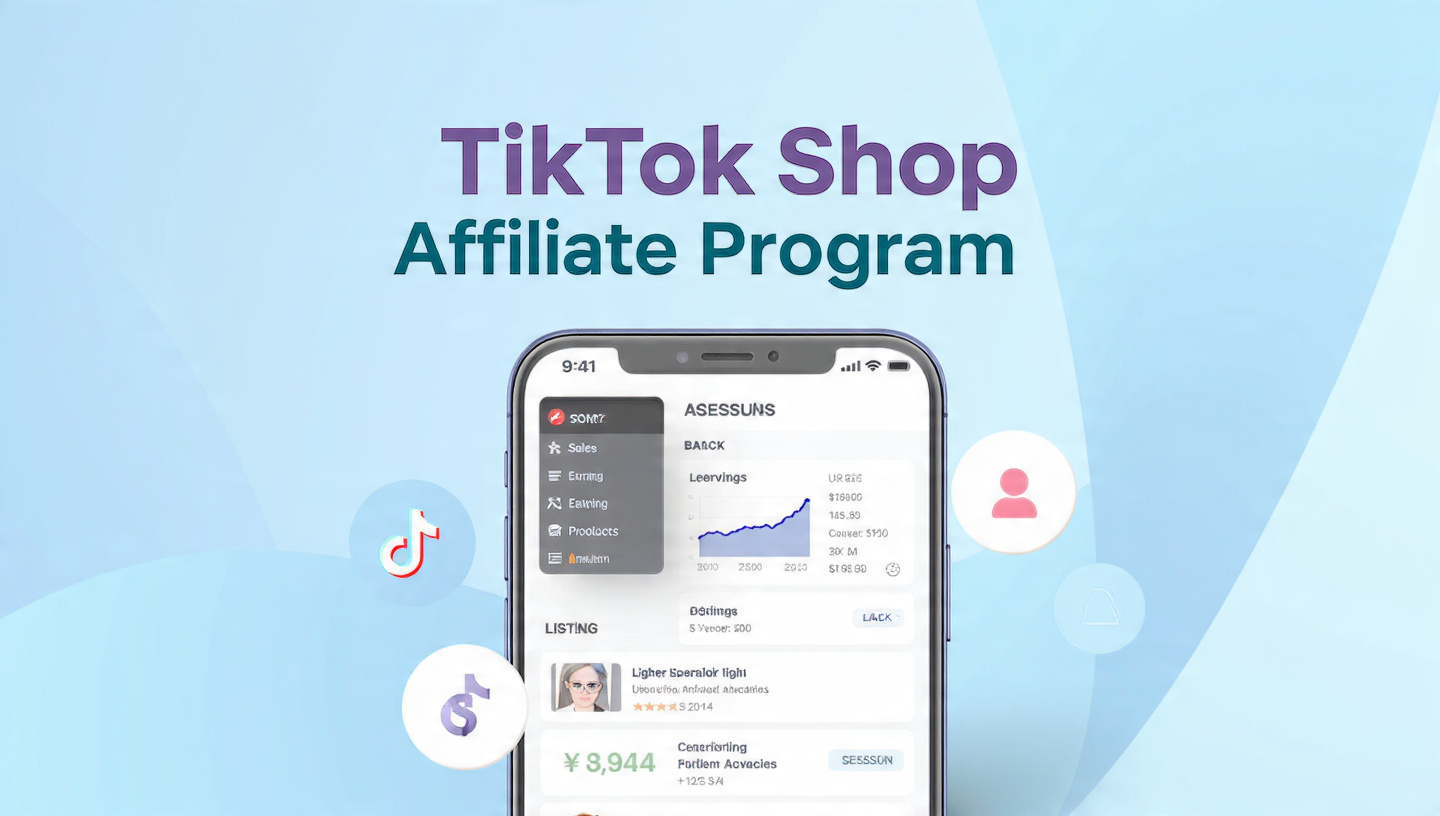
TikTok Shop Affiliate Program: How to Make Money Through Videos

tiktok-shop-affiliate-program

TikTok has transformed the way people discover products online. What started as a platform for short, entertaining videos has grown into a powerful shopping ecosystem where viewers can discover a product, watch someone demonstrate it, read reviews, and potentially purchase it—all without leaving the TikTok experience.

That creates an exciting opportunity for creators.

You don’t necessarily need to manufacture a product, maintain inventory, build an online store, or handle customer service to start earning from product recommendations. Through the TikTok Shop Affiliate Program, eligible creators can promote products from participating sellers and earn commissions when viewers make qualifying purchases through their affiliate content.

And perhaps the most appealing part?

You can build this business around something you’re already doing: creating videos.

Whether you’re interested in beauty, fashion, fitness, home products, technology, food, gadgets, pets, lifestyle, or everyday problem-solving products, TikTok Shop can give you a way to turn useful and entertaining content into a potential income stream.

Of course, making money isn’t as simple as posting a random product video and waiting for commissions to appear. Successful TikTok Shop affiliates learn how to choose products, understand their audience, create compelling videos, build trust, use TikTok’s shopping features effectively, analyze performance, and continuously improve their content.

This guide walks through the process from beginning to end.


What Is the TikTok Shop Affiliate Program?

The TikTok Shop Affiliate Program allows eligible creators to promote products offered by TikTok Shop sellers and earn a commission when their content contributes to qualifying sales.

Think of it as a partnership between three groups:

  • Sellers provide products.
  • Creators create content that promotes or demonstrates those products.
  • Customers discover and purchase products through TikTok.

The creator doesn’t generally need to own the inventory being promoted.

Instead, your job is to introduce products to your audience in an interesting, useful, authentic way.

For example, imagine you run a home organization account.

A seller offers a set of inexpensive drawer organizers. You create a short video showing a messy drawer, install the organizers, and reveal the finished result. If viewers are interested, they can tap the shopping feature associated with the product and potentially purchase it.

If the sale qualifies under the applicable affiliate terms, you receive a commission.

That’s the basic concept.

But there is a much bigger idea behind it.

You’re not really selling products—you’re creating reasons to care about them.

This distinction is incredibly important.

A weak affiliate video might say:

“Here is a great product. Buy it.”

A stronger video might say:

“If your kitchen drawer always looks like this, this $15 organizer completely changed mine.”

The second approach starts with a problem.

It creates curiosity.

It demonstrates a solution.

And it gives viewers a reason to continue watching.

That’s the foundation of successful affiliate content.


How Does TikTok Shop Affiliate Marketing Work?

The process can be broken into a relatively simple cycle:

Find a product → create content → attract viewers → generate product interest → drive purchases → earn commissions.

Let’s look at each stage.

1. Find a product

You browse available TikTok Shop products and identify items that fit your content and audience.

2. Add or feature the product

Depending on the available TikTok Shop features and your eligibility, you can associate eligible products with your content.

3. Create a video

You demonstrate, review, compare, explain, unbox, test, or otherwise showcase the product.

4. Viewers discover the video

TikTok distributes content through its recommendation systems, including the For You feed.

5. Viewers interact with the product

Interested viewers can access the associated shopping experience.

6. A qualifying purchase occurs

If someone purchases through the relevant affiliate flow and the transaction meets the program’s requirements, the creator can receive a commission.

7. You repeat and optimize

You study which products and videos perform well and use those insights to improve future content.

This creates a potentially scalable model.

One successful video can continue generating product interest beyond the moment you publish it, although performance varies considerably from video to video.


Why TikTok Shop Is Different From Traditional Affiliate Marketing

Traditional affiliate marketing often works like this:

Blog post → affiliate link → merchant website → purchase

TikTok Shop can make the journey much more integrated with short-form content.

Instead of asking someone to read a 2,000-word article and then click a link, you can show the product being used in real life.

For example:

A traditional affiliate website might publish:

“10 Best Portable Blenders for Smoothies.”

A TikTok creator might make:

“I tested this portable blender for seven days—here’s what surprised me.”

The second format can demonstrate the product immediately.

You can show:

  • How large it is
  • How it works
  • What it sounds like
  • What it looks like
  • How quickly it performs
  • What fits inside
  • What you like
  • What you don’t like
  • Who should buy it
  • Who shouldn’t

That visual experience can make short-form video particularly powerful for product discovery.


Can Beginners Make Money With TikTok Shop?

Yes, eligible beginners can potentially earn money through TikTok Shop affiliate content.

However, it’s important to have realistic expectations.

TikTok Shop isn’t an automatic-money machine.

You can upload ten videos and make no sales.

You can also create one excellent video that dramatically outperforms your normal content.

Results depend on many variables, including:

  • Product demand
  • Product quality
  • Commission structure
  • Video quality
  • Audience interest
  • Hook strength
  • Watch time
  • Engagement
  • Product-market fit
  • Competition
  • Pricing
  • Offer attractiveness
  • Seasonality
  • TikTok distribution
  • Your ability to build trust

The biggest mistake beginners make is treating affiliate marketing like a lottery.

They pick a product, post a video, and hope.

Successful creators generally take a more deliberate approach.

They test.

They learn.

They improve.

They repeat.


TikTok Shop Affiliate Eligibility

Before planning your strategy, you need to determine whether you’re eligible for TikTok Shop affiliate features in your market.

Eligibility can vary by:

  • Country or region
  • Age
  • Account status
  • Creator status
  • Follower or activity requirements
  • TikTok Shop availability
  • Compliance history
  • Other TikTok requirements

TikTok can also change program rules over time.

So don’t rely on an old blog post or a screenshot from several years ago.

Always check the current requirements displayed inside your TikTok account and the official TikTok Shop resources available for your region.

If you see an option related to TikTok Shop creator or affiliate features, follow the current application and onboarding instructions shown to you.


Step 1: Choose Your Niche

Before choosing products, choose the general subject you want your account to be associated with.

Your niche doesn’t have to be extremely narrow.

For example, instead of choosing:

“Everything I Like”

you could focus on:

Affordable Home Finds

Or:

Budget Beauty Products

Or:

Useful Tech Gadgets

Or:

Fitness Products for Beginners

Or:

Kitchen Tools Worth Buying

Or:

Products for Pet Owners

A niche helps your audience understand why they should follow you.

It also makes product selection easier.


Popular TikTok Shop Affiliate Niches

Some categories naturally lend themselves to video demonstrations.

1. Beauty

Beauty products can be highly visual.

Content ideas include:

  • Product demonstrations
  • Before-and-after concepts
  • Makeup routines
  • Skincare routines
  • Hair tools
  • Beauty hacks
  • Product comparisons
  • “Get ready with me” videos
  • First impressions
  • Tutorials

The key is authenticity.

Don’t make exaggerated claims simply because a product is popular.


2. Fashion

Fashion is another natural fit for TikTok.

You can create:

  • Outfit videos
  • Try-ons
  • Styling ideas
  • Seasonal looks
  • “3 ways to wear it”
  • Budget alternatives
  • Accessories
  • Shoes
  • Bags
  • Jewelry
  • Clothing hauls

Instead of simply showing a shirt, show several ways someone could wear it.

That transforms a product into an idea.


3. Home and Kitchen

This category is particularly useful for demonstration-based content.

You can show:

  • Cleaning tools
  • Storage products
  • Kitchen gadgets
  • Organization products
  • Lighting
  • Home décor
  • Small appliances
  • Cooking tools
  • Desk accessories

A great formula is:

Problem → Product → Demonstration → Result

For example:

“My kitchen counter was constantly covered in clutter. Then I tried this.”

That’s far more compelling than:

“Kitchen organizer available on TikTok Shop.”


4. Technology and Gadgets

People love seeing gadgets in action.

Potential content includes:

  • Gadget tests
  • Desk setups
  • Phone accessories
  • Charging devices
  • Computer accessories
  • Smart-home products
  • Audio accessories
  • Portable electronics
  • Travel gadgets

The more visually demonstrable the product is, the easier it can be to create engaging content around it.


5. Fitness

Fitness products can also work well in short-form video.

Examples include:

  • Resistance bands
  • Workout accessories
  • Fitness clothing
  • Gym bags
  • Recovery tools
  • Water bottles
  • Home workout equipment

Be particularly careful with health-related claims.

Don’t promise that a product will cure an illness, dramatically transform someone’s body, or produce guaranteed medical results.

Focus on what the product actually does.


6. Pet Products

Pet content has a major advantage:

Animals naturally attract attention.

You can create videos showing:

  • Toys
  • Beds
  • Grooming tools
  • Feeding accessories
  • Travel products
  • Cleaning products
  • Training accessories

A product demonstration featuring a genuinely interested pet can be entertaining while also showing the product’s purpose.


How to Choose Products That Actually Have Potential

Choosing the right product is one of the most important skills you’ll develop.

Don’t simply pick the product with the highest commission.

A high commission on a product nobody wants is still a bad opportunity.

Instead, evaluate products using several factors.


Product Factor #1: Does It Solve a Problem?

Problem-solving products are often easier to demonstrate.

Think about products that help people:

  • Save time
  • Stay organized
  • Clean faster
  • Cook more easily
  • Look better
  • Travel more comfortably
  • Work more efficiently
  • Store things
  • Reduce inconvenience
  • Improve an everyday routine

A product that solves an obvious problem gives you a natural video concept.


Product Factor #2: Is It Visually Interesting?

TikTok is a visual platform.

A product that looks impressive on camera can have an advantage.

Consider:

  • Transformations
  • Demonstrations
  • Satisfying processes
  • Unexpected features
  • Before-and-after results
  • Comparisons
  • Unboxings

For example, a simple cleaning brush may not sound exciting.

But a video showing it removing years of grime from a difficult surface can be fascinating.

The product hasn’t changed.

The presentation has.


Product Factor #3: Is the Price Reasonable?

Price matters because impulse purchases are common in social commerce.

That doesn’t mean expensive products cannot sell.

It means the viewer needs a stronger reason to purchase them.

A $10 product might require a few seconds of explanation.

A $300 product may require:

  • More trust
  • More demonstrations
  • More comparisons
  • More detailed explanations
  • More proof of value

Consider the purchasing friction before choosing what to promote.


Product Factor #4: Does It Have Good Reviews?

Reviews can provide useful clues.

Look for products with:

  • Consistent positive feedback
  • Clear product information
  • Sufficient review volume
  • Realistic customer expectations
  • Good seller reputation

Don’t promote something simply because the commission looks attractive.

Your reputation is more valuable than one commission.


Product Factor #5: Is the Commission Worth Your Effort?

Affiliate commission matters.

Suppose you have two products.

Product A:

  • $20 selling price
  • 10% commission
  • $2 potential commission

Product B:

  • $50 selling price
  • 10% commission
  • $5 potential commission

The second product may generate more revenue per sale, assuming similar conversion rates and applicable program terms.

But don’t ignore conversion.

A product that pays $2 and sells frequently can outperform a product that pays $10 but rarely converts.


Product Factor #6: Can You Make Multiple Videos About It?

This is an underrated factor.

Imagine you find a product that gives you one video idea.

That’s useful.

But imagine finding a product that gives you twenty ideas.

That’s much better.

For example:

Product: Portable Mini Vacuum

You could create:

  1. Unboxing
  2. First impression
  3. Car cleaning test
  4. Keyboard cleaning test
  5. Desk cleaning test
  6. Pet hair test
  7. “Things I didn’t expect”
  8. Before-and-after
  9. Pros and cons
  10. One-week review
  11. Comparison with a larger vacuum
  12. Satisfying cleaning video
  13. Travel test
  14. Office test
  15. Three reasons I like it
  16. Three things I dislike
  17. Who should buy it?
  18. Is it worth the money?
  19. Best use cases
  20. Frequently asked questions

One product becomes an entire content series.

That’s powerful.


The Most Important Skill: Creating a Strong Hook

You can have the perfect product and still create a terrible video.

Why?

Because people don’t owe your video their attention.

You have to earn it.

The first few seconds matter enormously.

Instead of starting with:

“Hey guys, today I’m going to show you this amazing product…”

Try opening with something that creates curiosity.

For example:

“I didn’t expect this $12 gadget to actually work.”

Or:

“If your kitchen drawer looks like this, watch this.”

Or:

“I finally found a way to organize all of this.”

Or:

“Three things I wish I knew before buying this.”

Or:

“This is one of the weirdest products I’ve tested.”

Or:

“I bought this because TikTok wouldn’t stop showing it to me.”

These hooks create a reason to keep watching.


25 TikTok Shop Video Hook Ideas

Here are some adaptable hook structures:

  1. “I didn’t expect this to work.”
  2. “This solved a problem I didn’t know I had.”
  3. “I finally understand why everyone is buying this.”
  4. “If you own a [product], you need to see this.”
  5. “I tested this so you don’t have to.”
  6. “Here’s what nobody told me about this.”
  7. “I found this for under $20.”
  8. “Three reasons I keep using this.”
  9. “Before you buy this, watch this.”
  10. “I wish I found this sooner.”
  11. “This might be the most useful thing I’ve bought.”
  12. “Let’s see if this actually works.”
  13. “TikTok convinced me to buy this.”
  14. “I had low expectations for this.”
  15. “Here’s what happened after one week.”
  16. “Would you buy this?”
  17. “Watch what happens when I try this.”
  18. “I tested the viral version.”
  19. “This is surprisingly useful.”
  20. “Here’s why this keeps selling out.”
  21. “If you’re dealing with [problem], try this.”
  22. “I found a ridiculously simple solution.”
  23. “Don’t make this mistake.”
  24. “This completely changed my routine.”
  25. “Let’s put this to the test.”

Remember: the hook should be truthful.

Curiosity is good.

Misleading viewers is not.


The Problem-Solution Video Formula

One of the easiest formats for beginners is:

Problem → Agitation → Solution → Demonstration → Result → Call to Action

Let’s imagine you’re promoting a cleaning tool.

Problem

“My shower glass always gets covered in water spots.”

Agitation

“I’ve tried sprays, microfiber cloths, and everything else, but it still looks dirty a few days later.”

Solution

“Then I tried this little cleaning tool.”

Demonstration

Show yourself using it.

Result

Show the difference.

Call to action

“If you want to check it out, I’ve linked the product here.”

Simple.

Natural.

Useful.


Don’t Make Every Video Feel Like an Advertisement

This is one of the most important lessons in affiliate marketing.

People come to TikTok to be entertained, educated, inspired, or surprised.

They don’t open the app thinking:

“I hope someone sells me something today.”

So your content should feel like content first.

The product should fit naturally into the story.

Instead of:

“BUY THIS PRODUCT!”

create:

“Here’s how I solved this problem.”

The difference is enormous.


Show the Product Instead of Talking About It

Whenever possible, demonstrate.

If you’re promoting a kitchen gadget, use it.

If you’re promoting clothing, wear it.

If you’re promoting a cleaning product, clean something.

If you’re promoting a phone accessory, attach it to your phone.

If you’re promoting a beauty product, demonstrate how you use it.

If you’re promoting a storage product, show what it organizes.

People trust what they can see.


Use Before-and-After Content

Before-and-after videos are naturally compelling.

They create a visual story.

Examples:

  • Messy room → organized room
  • Dirty surface → clean surface
  • Unstyled outfit → styled outfit
  • Cluttered desk → organized desk
  • Unpacked suitcase → packed suitcase
  • Bare wall → decorated wall
  • Old setup → upgraded setup

When your product contributes to a visible transformation, you have a built-in narrative.


Create Comparison Videos

Comparison content can attract people who are already considering buying.

For example:

“Cheap version vs. expensive version.”

“Product A vs. Product B.”

“Which one is actually worth buying?”

“I tested three viral organizers.”

Comparison videos can also position you as a helpful guide rather than simply a salesperson.


Create “Worth It?” Videos

The “Is it worth it?” format is simple and powerful.

Your structure can be:

Opening

“Is this $30 gadget actually worth it?”

Expectations

“Here’s what I expected.”

Test

Show the product.

Reality

Explain what happened.

Verdict

“Here’s who I think should buy it.”

This format works especially well when you are honest about both advantages and disadvantages.


Talk About What You Don’t Like

This may seem counterintuitive.

But criticism can increase trust.

If every product you promote is:

  • Amazing
  • Perfect
  • Incredible
  • Life-changing
  • The best ever

people may stop believing you.

Instead, say:

“I like this, but there’s one thing I’d change.”

Or:

“The only downside is…”

Or:

“This probably isn’t for you if…”

Honesty makes your recommendation feel more credible.


Create Content for Different Buyer Stages

Not everyone watching your video is ready to buy.

Your content can target different stages of the buying journey.

Stage 1: Problem Awareness

The viewer recognizes a problem.

Example:

“Why does your desk always get messy?”

Stage 2: Solution Awareness

The viewer discovers possible solutions.

“There are three easy ways to organize this.”

Stage 3: Product Awareness

The viewer discovers a specific product.

“This organizer solved my problem.”

Stage 4: Evaluation

The viewer compares options.

“Cheap organizer vs. premium organizer.”

Stage 5: Purchase

The viewer decides.

“Here’s who I recommend this for.”

Understanding these stages helps you create more diverse content.


How Often Should You Post?

There is no magical number that guarantees success.

Some creators post frequently.

Others post less often but focus heavily on quality.

For beginners, consistency is usually more useful than trying to create an impossible number of videos.

A practical approach might be:

1–3 quality videos per day when you have enough ideas and resources.

But don’t force yourself to publish low-quality videos simply to hit a number.

A sustainable schedule is better.

You want to avoid burnout.


Build a Content Testing System

Instead of randomly posting videos, create controlled experiments.

Suppose you’re promoting one product.

Create five different videos.

Video A

Problem-solution.

Video B

Unboxing.

Video C

Before-and-after.

Video D

Honest review.

Video E

Comparison.

Then compare performance.

You might discover that your audience responds much better to demonstrations than talking-head reviews.

That insight is valuable.


What Metrics Should You Watch?

Views matter.

But views aren’t everything.

For affiliate content, you should pay attention to metrics such as:

  • Views
  • Average watch time
  • Completion rate
  • Engagement
  • Shares
  • Saves
  • Product clicks
  • Product views
  • Orders
  • Conversion rate
  • Commission generated

A video with 20,000 views and no purchases isn’t necessarily better than a video with 5,000 views that produces consistent sales.

Ultimately, affiliate marketing depends on commercial intent.


Understand the Difference Between Viral and Profitable

This is an important distinction.

A video can go viral because it’s funny.

That doesn’t mean it will sell products.

For example:

A funny cat video gets 2 million views.

Fantastic reach.

But if the audience has no reason to purchase the product you’re promoting, the video may produce little affiliate revenue.

Meanwhile, a product demonstration might receive only 30,000 views but generate meaningful sales because the audience is highly interested.

So don’t chase views alone.

Chase relevant attention.


The TikTok Shop Affiliate Content Funnel

You can think about your content as a funnel:

Views

Interest

Product engagement

Product page visit

Purchase

Commission

Your job is to improve every stage.

If you get lots of views but few product interactions, your product presentation may be weak.

If people click but don’t buy, the product, price, reviews, offer, or landing experience may be the issue.

If people buy but your earnings are small, you may need to test different products or commission opportunities.


How to Make Faceless TikTok Shop Videos

You don’t necessarily have to appear on camera.

There are many ways to create product content without showing your face.

You can use:

  • Hands-only demonstrations
  • Product close-ups
  • Voiceovers
  • Text overlays
  • Screen recordings where appropriate
  • Unboxing footage
  • Before-and-after clips
  • Product demonstrations
  • Lifestyle footage
  • Tutorials

For example, a kitchen account can film only the hands preparing food.

A cleaning account can show the cleaning process.

A tech account can film a desk setup.

A fashion account can show clothing without showing the creator’s face, depending on the content style.

The important thing is that the video remains authentic and useful.


Should You Show Your Face?

There is no universal answer.

Showing your face can help with:

  • Personal connection
  • Trust
  • Brand building
  • Storytelling
  • Recognition

But faceless content can also work extremely well.

Choose the format that allows you to create consistently.

If you are comfortable on camera, experiment with talking-head content.

If you aren’t, don’t let that stop you from starting.


How to Use Voiceovers

Voiceovers are excellent for product videos.

You can record the footage first and then explain what’s happening.

For example:

“I bought this because my desk was constantly covered in cables. Installation took less than five minutes, and now everything is organized underneath the desk.”

Meanwhile, the video shows each step.

This keeps the viewer focused on the product while your narration tells the story.


Use Text Overlays Strategically

Many people watch videos without sound.

Text can make your message understandable immediately.

Useful overlays include:

  • “Before”
  • “After”
  • “Under $20”
  • “3 things I love”
  • “Worth it?”
  • “Watch this”
  • “How it works”
  • “My honest review”
  • “Pros”
  • “Cons”

Don’t cover the entire screen with text.

Keep it readable.


Create a Strong Call to Action

After showing the product, tell viewers what they can do next.

Examples:

“You can check out the product here.”

“I’ve added it to the shopping section if you want to see the details.”

“If you’re looking for something similar, check out the product attached to this video.”

The call to action doesn’t need to be aggressive.

It simply needs to make the next step clear.


Don’t Forget Disclosure

Affiliate marketing involves a commercial relationship.

Your audience should understand when you’re earning a commission or have another financial relationship with a product.

Follow TikTok’s disclosure requirements and applicable advertising laws in the markets where your content is viewed.

Clear disclosure helps protect your audience and your reputation.

A simple, understandable disclosure can be much better than hiding the relationship.


How to Build Trust With Your Audience

Trust is one of your most valuable assets.

Imagine you have 100,000 followers but nobody believes your recommendations.

That audience may be less valuable than 10,000 followers who trust you.

Build trust by:

  • Being honest
  • Demonstrating products
  • Mentioning limitations
  • Avoiding exaggerated claims
  • Testing products yourself when possible
  • Correcting mistakes
  • Choosing reputable sellers
  • Disclosing affiliate relationships
  • Recommending products that fit your niche

Your goal shouldn’t be:

“How can I get this person to buy?”

Instead ask:

“Would I genuinely recommend this to someone I care about?”

That mindset changes your content.


Don’t Promote Products You Don’t Understand

Before promoting a product, learn:

  • What it does
  • Who it’s designed for
  • Key features
  • Limitations
  • Price
  • Variations
  • Shipping considerations
  • Customer feedback
  • Seller information
  • Relevant restrictions

You don’t need to become an expert on every product.

But you should know enough to speak accurately.


Product Research Ideas

When researching potential products, look for:

Products people are already discussing

Popular discussions can reveal demand.

Products that solve annoying problems

These can produce excellent hooks.

Products with visual demonstrations

They’re easier to turn into short-form content.

Products with repeatable use cases

These provide more content ideas.

Products with strong customer satisfaction

A good customer experience protects your credibility.


Use Trends Carefully

TikTok trends can help you get attention.

But don’t force every product into every trend.

If a trend doesn’t fit your niche, it can make your content feel awkward.

Instead, ask:

“How can I adapt this trend to my audience?”

For example, if a sound or format is trending and you’re a home organization creator, use it to showcase an organization transformation.

The trend supports the content.

The product remains relevant.


Create Series Instead of Isolated Videos

Series are powerful because they give viewers a reason to return.

Examples:

“Amazon vs. TikTok Shop”

“Testing Viral Gadgets”

“Under $20 Finds”

“Things That Actually Make Life Easier”

“TikTok Made Me Buy It”

“Worth It or Waste of Money?”

“One Product, Three Uses”

“Testing Products My Followers Requested”

A recognizable series can become part of your identity.


Use Comments as Content Ideas

Your audience can tell you what to create next.

If someone comments:

“Does it work on pet hair?”

That’s a video idea.

If someone asks:

“Is there a larger size?”

That’s a video idea.

If someone says:

“Can you compare this to the other one?”

That’s a video idea.

Comments aren’t just engagement.

They’re free market research.


Reply to Comments With Videos

When appropriate, create video replies to questions.

This accomplishes several things at once:

  • Answers the viewer
  • Creates new content
  • Shows that you listen
  • Addresses objections
  • Builds trust

For affiliate marketing, objection-handling content can be especially valuable.


Common Buyer Objections

Before purchasing, viewers may wonder:

  • Is it worth the price?
  • Does it really work?
  • Is it durable?
  • Is it easy to use?
  • Is it large enough?
  • Is it safe?
  • Is it difficult to clean?
  • Does it work as advertised?
  • Is there a cheaper alternative?
  • Is it better than the older model?

Create videos answering these questions.

You are helping the viewer make a decision.


How to Turn One Product Into 30 Videos

Let’s use a fictional kitchen gadget as an example.

Educational Videos

  1. How it works
  2. How to use it
  3. Three useful features
  4. Common mistakes
  5. Cleaning instructions

Review Videos

  1. First impression
  2. One-week review
  3. Pros and cons
  4. What I don’t like
  5. Is it worth it?

Demonstrations

  1. Test #1
  2. Test #2
  3. Before and after
  4. Speed test
  5. Durability test

Comparison

  1. Product A vs. Product B
  2. Cheap vs. expensive
  3. Old version vs. new version

Lifestyle

  1. Morning routine
  2. Dinner preparation
  3. Weekend kitchen reset

Storytelling

  1. Why I bought it
  2. What happened after a week
  3. Biggest surprise
  4. Biggest disappointment

Short-form Hooks

  1. “I didn’t expect this…”
  2. “Watch this.”
  3. “Three reasons…”
  4. “Before you buy…”
  5. “Would you buy this?”

One product can become a content engine.


How to Make Your Videos Feel More Professional

You don’t need an expensive camera.

A modern smartphone can be enough.

Focus on fundamentals:

Lighting

Use bright, natural light whenever possible.

Audio

Clear audio matters more than many beginners realize.

Background

Keep the background relevant and uncluttered.

Framing

Make sure viewers can clearly see the product.

Editing

Remove unnecessary pauses.

Captions

Make key information easy to understand.

Demonstration

Show the product in action.

Good production isn’t about making everything cinematic.

It’s about making everything easy to understand.


Simple TikTok Shop Video Structure

Try this basic structure:

0–2 seconds

Hook

2–6 seconds

Problem or curiosity

6–15 seconds

Product demonstration

15–25 seconds

Result or explanation

Final seconds

Call to action

The exact duration can vary.

Don’t stretch a 12-second idea into 45 seconds just to make it longer.

If you can communicate the value quickly, do it.


Storytelling Makes Products More Interesting

People don’t connect emotionally with specifications.

They connect with stories.

Instead of saying:

“This storage box is 30 centimeters wide.”

Try:

“My closet was so crowded that I couldn’t find anything.”

Then show how the storage box helps.

Specifications still matter.

But stories give them context.


Use the “I Tried It So You Don’t Have To” Format

This is excellent for affiliate content.

For example:

“I tested five viral kitchen gadgets so you don’t waste your money.”

Then rank them.

You can create:

  • Winner
  • Runner-up
  • Best budget option
  • Most useful
  • Biggest disappointment

This creates a strong reason to watch until the end.


Ranking Videos

People enjoy lists.

Examples:

“My top 5 desk gadgets.”

“Three cleaning products I would actually buy again.”

“Five useful travel products.”

“The best and worst kitchen finds I’ve tested.”

Ranking creates curiosity because viewers want to know which product wins.


Mistakes New TikTok Shop Affiliates Make

Let’s look at some common mistakes.

Mistake #1: Choosing Products Only for Commission

High commission doesn’t guarantee sales.

Choose products people actually want.


Mistake #2: Making Generic Videos

If your video looks exactly like hundreds of others, viewers have little reason to stop.

Add your own:

  • Opinion
  • Demonstration
  • Story
  • Test
  • Comparison
  • Personality

Mistake #3: Overhyping Everything

Not every product is “life-changing.”

Be honest.


Mistake #4: Ignoring the Hook

A great product doesn’t matter if nobody watches long enough to understand it.


Mistake #5: Focusing Only on Views

Views are useful, but sales are what matter for affiliate revenue.


Mistake #6: Giving Up Too Early

Your first videos may perform poorly.

That’s normal.

You’re learning.


Mistake #7: Copying Other Creators Exactly

Study successful videos.

Don’t become a clone.

Take the underlying principle and apply your own perspective.


Mistake #8: Promoting Too Many Unrelated Products

If today you’re recommending skincare, tomorrow dog toys, and the next day car accessories, your audience may struggle to understand your account.

A clear niche can help.


How Long Does It Take to Make Money?

There is no guaranteed timeline.

Some creators may generate commissions quickly.

Others may spend weeks or months testing content before seeing meaningful results.

Your early stage should be viewed as a learning period.

You are discovering:

  • Which hooks work
  • Which products interest your audience
  • Which formats convert
  • Which topics generate engagement
  • Which video lengths perform
  • Which calls to action feel natural

Think of your first 30–50 videos as research.

You’re building a database of knowledge.


How Much Can TikTok Shop Affiliates Make?

There is no universal income number.

Some affiliates make relatively small amounts.

Others generate substantial revenue.

Income can vary dramatically based on:

  • Number of views
  • Product prices
  • Commission percentages
  • Conversion rates
  • Audience size
  • Audience purchasing intent
  • Product quality
  • Content frequency
  • Seasonality
  • Platform distribution
  • Seller promotions

Don’t build your plan around screenshots of someone’s earnings.

Build it around a repeatable process.


A Simple Affiliate Revenue Calculation

Suppose a product sells for $40.

Assume the applicable affiliate commission is 10%.

A qualifying sale would produce:

$40 × 10% = $4 commission

If you generated 100 qualifying sales:

100 × $4 = $400

If you generated 1,000 qualifying sales:

1,000 × $4 = $4,000

These are simple illustrations, not income guarantees.

Actual earnings depend on the applicable commission, transaction terms, returns, cancellations, attribution rules, taxes, and other factors.


Why Conversion Rate Matters

Imagine two videos.

Video A

100,000 views

100 sales

Video B

20,000 views

150 sales

Video B generated fewer views but more sales.

That’s why affiliate creators should study commercial performance rather than chasing viral reach alone.


Build a Product Testing Spreadsheet

You can keep a simple record of:

ProductVideosViewsClicksOrdersCommissionBest Hook
Product A580K1,20075$300Problem
Product B330K80060$240Demo
Product C6100K90020$100Unboxing

The numbers above are fictional.

The point is to identify patterns.

You may discover:

  • Demonstrations convert better.
  • Certain products get lots of views but few sales.
  • Certain hooks consistently outperform others.
  • Some categories generate higher-value customers.

Data helps you stop guessing.


Double Down on Winners

When something works, don’t immediately move on.

Make variations.

If one product video performs well, create:

  • Another hook
  • A shorter version
  • A longer explanation
  • A comparison
  • A response to comments
  • A new demonstration
  • A pros-and-cons video
  • A “one month later” review
  • A different use case

You don’t need to reinvent everything.

Sometimes you simply need to explore what worked.


But Don’t Become Repetitive

There is a difference between:

building on a winning idea

and

posting the same video twenty times.

Keep the core concept but change the:

  • Hook
  • Angle
  • Story
  • Demonstration
  • Audience problem
  • Setting
  • Format

This allows you to learn without boring your audience.


Seasonal Opportunities

Shopping behavior changes throughout the year.

Think about:

  • Valentine’s Day
  • Mother’s Day
  • Father’s Day
  • Back-to-school season
  • Halloween
  • Thanksgiving
  • Christmas
  • New Year
  • Summer travel
  • Winter products
  • Wedding season

Seasonal content can create urgency.

For example:

“Three useful gifts for someone who loves cooking.”

Or:

“Travel products I wish I’d bought before my vacation.”

Plan your content before the season arrives.


Gift Guides Can Work Well

Gift-oriented content gives viewers a reason to browse multiple products.

Examples:

“10 gifts for someone who loves coffee.”

“Five useful gifts under $25.”

“Gift ideas for new homeowners.”

“Three gifts for the person who has everything.”

The key is matching products to a specific recipient or situation.


Build an Audience, Not Just Sales

The biggest long-term opportunity isn’t one commission.

It’s building an audience that trusts your recommendations.

If people follow you because you consistently help them discover useful products, you have created an asset.

That audience can potentially support:

  • Affiliate marketing
  • Sponsorships
  • Brand partnerships
  • Your own products
  • Digital products
  • Other content channels

TikTok Shop can be one part of a larger creator business.


Repurpose Your Content

If you create a good product video, consider adapting the concept for other platforms where permitted.

You can potentially build a broader presence across:

  • Instagram Reels
  • YouTube Shorts
  • Pinterest
  • Facebook
  • Your website
  • Email newsletters

However, don’t blindly repost everything.

Adapt the content to the audience and rules of each platform.


Build an Email List

TikTok gives you access to an audience, but you don’t fully control the platform.

That’s why building an owned audience can be valuable.

Depending on your business model, you might eventually encourage interested followers to join an email newsletter, visit your website, or follow another channel.

This gives you another way to communicate with your audience.


Create a Recognizable Personal Brand

You don’t need a fancy logo.

Your personal brand can simply be:

“The person who tests affordable gadgets.”

Or:

“The creator who finds useful home products.”

Or:

“The honest budget beauty reviewer.”

Or:

“The guy who tests viral products so you don’t waste money.”

A clear identity helps people remember you.


Your Personality Is an Advantage

Products are available everywhere.

Your perspective isn’t.

Two creators can review the same product and create completely different experiences.

One might be:

  • Funny

Another:

  • Analytical

Another:

  • Energetic

Another:

  • Calm

Another:

  • Extremely practical

Don’t worry about copying somebody else’s personality.

Develop your own.


A 30-Day TikTok Shop Affiliate Plan

If you’re just getting started, here’s a simple roadmap.

Week 1: Research

Day 1

Choose your niche.

Day 2

Research potential products.

Day 3

Choose 5–10 products.

Day 4

Study successful content in your niche.

Day 5

Write 10 hooks.

Day 6

Film your first batch.

Day 7

Edit and publish.

Don’t obsess over perfection.


Week 2: Testing

Create several formats.

Test:

  • Demonstrations
  • Reviews
  • Problem-solution
  • Comparisons
  • Unboxings

Track results.

Don’t decide that your strategy is “dead” after one bad video.


Week 3: Optimization

Identify your strongest:

  • Product
  • Hook
  • Video format
  • Topic
  • Call to action

Create more variations.

Start using comments as content ideas.


Week 4: Scaling

By now, you should have some information.

Ask:

  • Which products attracted attention?
  • Which generated clicks?
  • Which generated sales?
  • Which videos had strong watch time?
  • Which hooks performed best?
  • Which content felt easiest to produce?

Then build your next month’s strategy around what you’ve learned.


A Daily TikTok Shop Workflow

Here’s a simple routine.

Step 1: Research

Spend 20–30 minutes studying products and trends.

Step 2: Brainstorm

Write five hooks.

Step 3: Film

Batch multiple videos.

Step 4: Edit

Keep the pacing tight.

Step 5: Publish

Use relevant product-shopping features.

Step 6: Engage

Respond to comments.

Step 7: Analyze

Review performance.

Step 8: Improve

Use what you learned in tomorrow’s videos.

This turns affiliate marketing into a process rather than a guessing game.


Batch Your Content

Instead of filming one video every day, consider filming several at once.

For example:

Saturday morning:

Film 10 product demonstrations.

Saturday afternoon:

Record voiceovers.

Sunday:

Edit and prepare content.

This can save significant time.


Create a Hook Bank

Whenever you think of a good opening line, write it down.

Eventually you’ll have dozens or hundreds.

Then, when you discover a new product, you don’t start from zero.

You simply adapt proven structures.


Create a Product Evaluation Checklist

Before promoting a product, ask:

Product

  • Does it solve a real problem?
  • Is it visually demonstrable?
  • Is it reasonably priced?
  • Does it have good customer feedback?
  • Can I create multiple videos?

Audience

  • Does my audience care?
  • Does it fit my niche?
  • Would I personally recommend it?

Content

  • Can I demonstrate it?
  • Do I have a strong hook?
  • Can I tell a story?
  • Can I answer objections?

Business

  • Is the commission worthwhile?
  • Are the applicable terms clear?
  • Is the seller reputable?
  • Are there any relevant restrictions?

If most answers are yes, the product may be worth testing.


Ethical Affiliate Marketing Matters

Making money should never require misleading people.

Avoid:

  • Fake testimonials
  • Fake scarcity
  • False claims
  • Fake before-and-after images
  • Misleading pricing
  • Hidden affiliate relationships
  • Fabricated product experiences
  • Unrealistic promises

If you haven’t tested a product yourself, don’t pretend that you have.

If something is sponsored, disclose it appropriately.

If you earn a commission, be transparent.

Trust compounds.

So does distrust.


Protect Your Reputation

Imagine earning $50 from a product today.

Now imagine that the customer discovers the product was terrible and remembers that you recommended it.

That one commission may cost you future followers, sales, and opportunities.

Your reputation can be worth far more than individual commissions.

Think long term.


Common Questions About TikTok Shop Affiliate Marketing

Do I need to create my own products?

No. Affiliate marketing allows eligible creators to promote products from participating sellers rather than manufacturing the products themselves.


Do I need a warehouse?

Generally, no. As an affiliate creator, you’re promoting products rather than operating the seller’s inventory.


Do I need a huge following?

A huge following isn’t necessarily required.

A smaller, highly relevant audience can sometimes be more commercially valuable than a massive but uninterested audience.

Eligibility requirements still apply, and they can vary by market.


Can faceless accounts make money?

Yes, faceless content can be used for product-focused content, provided it follows TikTok’s rules and provides genuine value.


Do I have to buy every product?

Not necessarily.

However, personally testing products can make your content more authentic and useful.

Never claim that you personally tested something if you didn’t.


Can I promote multiple products?

Potentially, yes, depending on the products, your eligibility, and TikTok’s current program rules.

However, beginners often benefit from focusing on a clear niche rather than promoting completely unrelated items.


What type of videos sell best?

There isn’t one guaranteed format.

Demonstrations, problem-solution videos, comparisons, reviews, before-and-after content, tutorials, and storytelling can all work.

Your job is to test.


How many videos should I make?

There is no guaranteed number.

Consistency matters more than chasing an arbitrary posting target.

Create as much quality content as you can sustainably produce.


Why do my videos get views but no sales?

Possible reasons include:

  • Wrong audience
  • Weak product
  • Poor product-market fit
  • Low buyer intent
  • Weak product demonstration
  • Unclear call to action
  • High price
  • Poor offer
  • Low trust

Don’t automatically assume the problem is TikTok’s algorithm.

Look at the entire funnel.


The Real Secret to TikTok Shop Success

If there is one principle worth remembering, it’s this:

Make the video valuable even before the viewer buys anything.

If your video teaches something useful, entertains someone, solves a problem, demonstrates a clever product, or helps them make a better purchasing decision, you’ve already provided value.

The sale becomes the natural next step.

That is much stronger than begging for clicks.


Your Long-Term TikTok Shop Strategy

Think beyond individual videos.

Your long-term strategy can look like this:

Phase 1: Learn

Understand TikTok content and your audience.

Phase 2: Test

Experiment with products and formats.

Phase 3: Identify

Find your winning products and content styles.

Phase 4: Repeat

Create variations of successful concepts.

Phase 5: Build

Develop a recognizable brand.

Phase 6: Diversify

Expand into additional income sources.

The goal isn’t to become dependent on one viral video.

The goal is to develop a repeatable content system.


Final Thoughts

The TikTok Shop Affiliate Program has created an interesting opportunity for creators who enjoy discovering, demonstrating, reviewing, and recommending products.

You don’t need to begin with expensive equipment.

You don’t need a massive studio.

You don’t need to be a professional salesperson.

And you don’t need to know everything on day one.

You need a willingness to learn.

Start with a niche you genuinely understand or enjoy. Find products that solve real problems. Create videos that demonstrate those products instead of simply advertising them. Pay attention to your hooks, watch time, product interactions, and sales. Listen to your audience. Respond to questions. Test different formats. Improve the videos that work and learn from the ones that don’t.

Most importantly, protect your credibility.

The strongest affiliate creators aren’t necessarily the people who promote the most products.

They’re the people viewers trust when they say:

“I tried this, and here’s what I really think.”

That trust is the foundation.

TikTok can provide the audience.

TikTok Shop can provide the shopping infrastructure.

Affiliate commissions can provide the potential income.

But your content is what connects everything together.

So don’t wait for the perfect camera, perfect product, or perfect strategy.

Choose a niche.

Find a few genuinely useful products.

Create your first videos.

Learn from the data.

Make the next video better.

Then do it again.

Over time, those small improvements can turn a simple TikTok account into a valuable content business—and potentially turn product recommendations into a meaningful stream of affiliate income.

Leave a Reply

Your email address will not be published. Required fields are marked *